
Small Business Index Falls Below Historic Average: What It Means
- June 21, 2026
- Posted by: Alex Reed
- Category: Related News
Small businesses are the backbone of the American economy, but recent reports show they’re facing tough challenges. Understanding these issues can help everyday people make informed decisions about work and spending.
Current Economic Landscape for Small Businesses
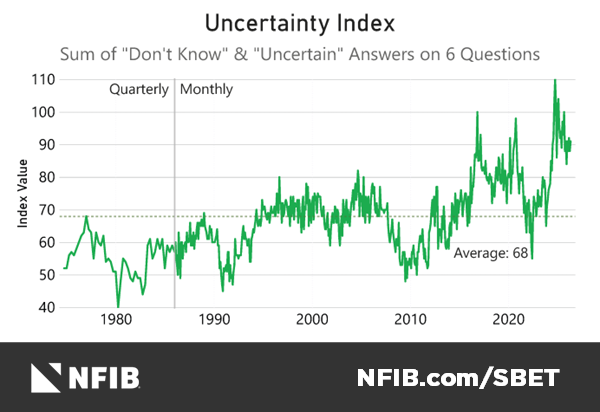
A recent report from the National Federation of Independent Business (NFIB) revealed a concerning trend in the small business sector. According to their Small Business Economic Trends (SBET) report, the index fell by 0.6 points in May, landing at 95.3. This figure is notably below the 52-year average of 98.0. Additionally, the Uncertainty Index rose by 3 points from April, now standing at 91, which is well above the historical average of 68. This suggests that small business owners are feeling anxious about the future.
Ronda Wiggers, state director for NFIB in Montana, noted that while the national scene seems a bit shaky, Montana’s favorable regulatory environment combined with Congress’s decision to make the 20% Small Business Deduction permanent may provide some relief. Wiggers emphasized that if Congress could also address the reporting requirement for beneficial ownership information and reform credit card swipe fees, it would significantly benefit small businesses overall.
Inflation and Supply Chain Concerns
Inflation is clearly top of mind for many small business owners. The latest survey showed that 18% of them identified inflation as their most pressing concern, which is up 2 points from April. This is the highest level recorded since December 2024. In May, both spontaneous and planned price hikes surged, with 36% of business owners reporting actual price increases—a figure that has risen significantly since March 2023.
Small businesses are finding it increasingly difficult to navigate rising costs, especially when it comes to fuel prices. These hikes are tougher for smaller firms to manage compared to their larger competitors, who might absorb costs more easily. As a result, many small businesses are feeling the pressure to raise prices and remain profitable.
Planned Investments are Shrinking
In light of these economic pressures, plans for capital expenditures are faltering. Only 16% (seasonally adjusted) of small business owners indicated plans to invest in capital outlays in the next six months—a decrease from April and the lowest percentage seen since 2009. This decline reflects the uncertainty that many small business owners deal with, as they weigh the risks of making significant investments during a tumultuous economic climate.
Additionally, the report highlighted that 70% of small business owners felt that supply chain disruptions were affecting their operations, which has increased by 6 points from April. This shows that logistical challenges continue to add complications to an already stressed economy, making it harder for small businesses to thrive.
What This Means for You
For everyday consumers, these trends indicate that prices may continue to rise as small businesses cope with increased operational costs. Awareness of these dynamics can help inform your spending decisions.
If you ever need to review small business contracts or agreements, legal-document-to-plain-english-translator/”>AI legalese decoder can help you decode the fine print quickly. Understanding the legal language in contracts can empower you as a consumer or entrepreneur in today’s challenging economic landscape.
Need to decode legal language? Try the free AI Legalese Decoder — no registration required.
Source: https://www.nfib.com/news/press-release/small-business-index-slips-below-its-historic-average-3/

 ****** just grabbed a