
How Technology Helps Small Businesses Overcome Key Challenges
- June 14, 2026
- Posted by: Alex Reed
- Category: Related News
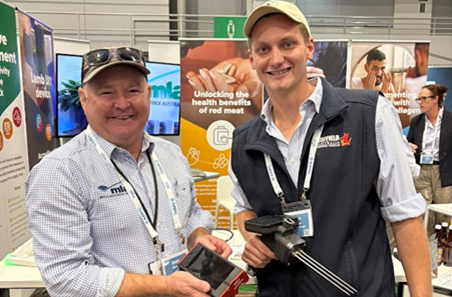
Calian Byrnes is on a mission. He wants to break down barriers for small businesses in the beef industry, making it easier for them to use the latest technology for meat grading. This technology, known as objective measurement (OM), can improve quality but often comes with high costs that can leave smaller players behind.
Challenges for Small Businesses
Running a small business often comes with its unique set of difficulties. One major hurdle for companies like Byrnes Meats, which is a family business run by Cailan, is accessing advanced technology. The high costs associated with purchasing and maintaining OM grading equipment can make it almost impossible for businesses in northern Australia to compete with larger industry players.
Cailan aims to change this by collaborating with the industry to enhance the usability of OM technology. “The main hurdle for smaller, family-run businesses like mine is the cost, not just of the technology but also of maintaining certification and skilled staff,” he explains. Currently, the technology requires trained graders to operate effectively, and extensive training is necessary to ensure accuracy. Cailan hopes that, with advancements in the next few years, the technology will become more affordable and accessible, providing much-needed support to smaller enterprises like his.
Searching for Solutions
As part of his Nuffield Australia Scholarship, Cailan traveled internationally to find examples of businesses that successfully implemented technology without compromising their production speed. His travels took him to Denmark, where he met with Frontmatec, a firm behind the handheld Q-FOM™ meat grading camera. He also visited Chile, where he observed how seed processing and blueberry packaging operations are optimized for efficiency.
Cailan emphasizes the importance of integrating technology without slowing down production. He notes, “It’s all well and good to have the technology, but if it slows down production speed, it won’t benefit anyone.” Certification and accuracy are also crucial; the technology must deliver reliable results to be truly effective.
The Value of Nuffield Scholarships
Nuffield scholarships are more than just a chance to travel; they also provide the opportunity for personal and professional growth. Cailan expresses how the scholarship encourages individuals to step out of their comfort zones and think creatively about industry challenges. “It enables people to have an idea, develop their passion, and explore how it might change the industry,” he states.
These scholarships give smaller producers a platform to express their concerns and ideas, ultimately benefiting the entire industry. Cailan believes that empowering people on the ground can lead to meaningful changes and more equal opportunities.
What This Means for You
Small businesses often struggle to keep up with larger competitors because of obstacles like high technology costs. If you’re involved in a business that requires a certain level of certification or technology, understanding the related documents is crucial. If you ever need to review a training agreement or any certification-related paperwork, legal-document-to-plain-english-translator/”>AI legalese decoder can translate it into plain English in seconds.
By staying informed and seeking support, whether through scholarship opportunities or technological advancements, small businesses can pave the way for a brighter future.
Need to decode legal language? Try the free AI Legalese Decoder — no registration required.
Source: https://www.mla.com.au/news-and-events/industry-news/tech-is-key-to-small-business-barriers/

 ****** just grabbed a