
AI-Generated Video in Vermont Congressional Race Raises Disclosure Questions
- June 11, 2026
- Posted by: Alex Reed
- Category: Related News
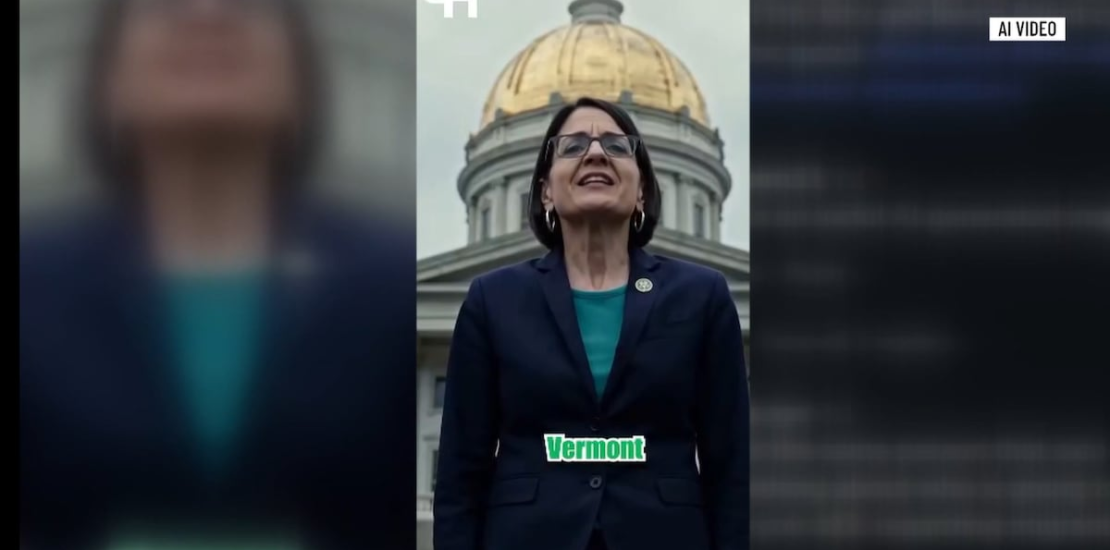
An AI-generated video featuring politicians is stirring conversations about technology’s role in elections. This story matters because it raises concerns about misinformation and free speech that could affect how we understand political messages.
AI Deepfakes and Political Speech
A recent video circulating on Vermont social media showcases Democratic U.S. Rep. Becca Balint and her possible GOP challenger, Mark Coester. The video is entirely AI-generated, displaying fabricated quotes attributed to both candidates. Coester, who is running for the Republican primary, stated he neither created nor funded the video.
Rep. Balint has labeled the video as a “deepfake,” expressing her worry over its potential impact. “I’m concerned about this not just for me but for anyone in elected office who wants Vermonters to hear directly from them,” she said. Balint argues that more regulations are needed for this technology to protect individuals from impersonation and misinformation. “Right now, anyone can make an AI-generated clip of them, post it online, and have absolutely no protections,” she noted.
Freedom of Speech or Misinformation?
The video was posted by Hank Poitras, a controversial Brattleboro-based content creator known for mocking elected officials. He argues that the deepfake is a form of satire and is protected by the First Amendment. “This is still America, for now, and we have the freedom of speech in the Bill of Rights,” Poitras asserted.
His view highlights an ongoing debate: where should the line be drawn between creative expression and misleading information? While satire has long been a part of American political culture, the use of AI to create realistic, yet false, depictions complicates the discussion.
Additionally, the video may serve as a test for a new Vermont law that mandates the disclosure of AI-generated content in campaign materials released within 90 days of an election. This law aims to improve transparency and help voters differentiate between real and altered content.
Legislative Responses to AI’s Rapid Growth
Vermont’s new law reflects a concern that technology is advancing faster than laws can adapt. Backers, like state Rep. Chea Waters Evans, emphasize the importance of understanding what is real in an era of increasingly convincing AI content. “The technology is going to get more and more believable, and that’s why it’s really important Vermonters know what’s real and what isn’t,” Evans stated.
Experts like Jared Carter, a professor at Vermont Law and Graduate School, note that any court ruling will have significant implications for the state’s new legislation. Should the courts define the video as political speech rather than satire, it will be subject to the provisions of the new law. However, Carter raises concerns that this law could create complications for artistic expression. “I think this law potentially has some vulnerabilities even if it’s aimed at what I think we can all acknowledge as a real and legitimate problem,” he argued.
The Attorney General’s Office is currently reviewing the video and will determine if any legal action is necessary.
What This Means for You
The rise of AI-generated content could impact how you consume political messages. Always verify the information from reliable sources to avoid falling for misinformation. If you ever need to review legal documents, like contracts or agreements, for accuracy or clarity, legal-document-to-plain-english-translator/”>AI legalese decoder can translate it into plain English in seconds. Understanding the fine print helps you make informed decisions in any situation involving legal documents.
Need to decode legal language? Try the free AI Legalese Decoder — no registration required.

 ****** just grabbed a