
Wood-based biochar enhances the application of fungal biopesticides
- May 15, 2026
- Posted by: Alex Reed
- Category: Related News
Applying beneficial microbes to soil might sound straightforward, but it often presents challenges in distribution. A recent study reveals how the right type of biochar could make this process easier, which is important for sustainable agriculture and food production.
What Is Biochar?
Biochar is a carbon-rich material created by heating biomass, like plant waste, in an environment with limited oxygen. It holds potential for various agricultural applications, particularly as a carrier for beneficial microbes. One popular microbe, Trichoderma, is known for its ability to suppress harmful plant pests and boost plant growth. However, maintaining these living organisms while ensuring they are easy to apply has always been a significant hurdle in biocontrol products.
The Study’s Findings
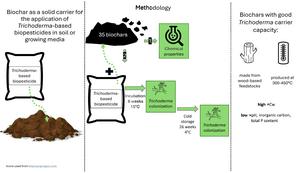
Researchers evaluated 35 types of biochars, sourced from materials such as wood, manure, and even coffee grounds. They produced these biochars at various temperatures between 300 °C and 750 °C and then inoculated them with ASPERELLO® T34 Biocontrol, a commercial formulation containing the Trichoderma fungus. The biochar samples were kept at 15 °C for eight weeks post-inoculation to assess their effectiveness as carriers.
The results indicated that not all biochars work equally well for supporting fungi. Biochars created from wood and produced at lower pyrolysis temperatures less than 450 °C showed the best results in terms of keeping Trichoderma alive. In contrast, biochars based on manure or made at higher temperatures struggled to maintain fungal viability.
Key Traits of Good Biochar
The researchers discovered specific chemical properties linked to effective carrier biochars. Good options generally had higher levels of water-soluble carbon and lower pH and inorganic carbon levels. These traits create a more favorable environment for fungal survival. Biochars produced at higher temperatures often become more resistant and less supportive of microbial growth due to fewer available carbon sources.
Out of the 35 biochars tested, ten were marked as excellent carriers since they maintained or even boosted the initial Trichoderma population after the incubation period. To test how well these biochars could support long-term storage, researchers further examined four promising samples. After 26 weeks at 4 °C, these biochars retained similar Trichoderma levels, indicating that the right biochar could help improve shelf life.
What’s Next?
This study represents a significant advancement toward practical biochar-based biocontrol strategies. As Dr. Jane Debode from the Flanders Research Institute for Agriculture, Fisheries, and Food noted, a solid mix of biochar and Trichoderma could allow farmers to apply smaller amounts more evenly before planting. However, the researchers emphasize that further studies are necessary to see if these results are applicable to other Trichoderma strains and formulations, as well as to evaluate how effective they are in real-world agricultural scenarios.
What this means for you
For those interested in sustainable farming or even gardening, understanding how biochar works can be incredibly valuable. As consumers become more aware of agricultural practices, the relationship between biochar and Trichoderma could be significant for food quality and sustainability. If you ever need to review agricultural agreements or related documents, legal-document-to-plain-english-translator/”>AI legalese decoder can help translate them into plain English in seconds.
Need to decode legal language? Try the free AI Legalese Decoder — no registration required.

 ****** just grabbed a