
Women Lead Business Ventures Amid Taliban Regulations
- June 21, 2026
- Posted by: Alex Reed
- Category: Related News
The plight of women in Afghanistan is dire, marked by severe restrictions under the Taliban regime. Yet, amidst oppression, a growing number of women are finding a way to support themselves and their families through entrepreneurship, often in creative and resilient ways.
Women’s Entrepreneurship on the Rise
Despite the Taliban’s harsh rules, more than 10,000 Afghan women have obtained business licenses, a significant increase over the past five years. Many other women work without licenses, indicating a hidden economy that sustains countless families. In a country where fewer than 7 percent of women were employed as of early 2024, these small businesses have become a crucial lifeline. While the opportunities appear promising on the surface, the challenges they face are substantial.
Many women aspiring to professional careers in fields like law or engineering are now pivoting to traditional crafts, beauty products, and vocational training. They are restricted from many professions, including government jobs and roles in most nonprofit organizations. This shift illustrates a harsh reality: women’s dreams of professional advancement have largely evaporated, leaving entrepreneurship as one of their few options.
Challenges Remain High
Even those who start businesses often encounter a maze of obstacles. Women are banned from running beauty salons, studying healthcare fields, or even talking to male colleagues, suppliers, and banking officials. The Taliban have implemented a morality police that enforces these restrictions, leading to public protests from brave women who demand their rights.
Entrepreneurs like Nasira Azizi, a 19-year-old rug business owner, exemplify this struggle. After being barred from continuing her education, Azizi found a new purpose in running a rug workshop. With support from the U.N. Development Programme, she now employs around 450 workers, but comments on how limitations still confine her business’s potential.
Creativity within Constraints
The stories of entrepreneurial women like Azizi highlight both resilience and creativity in the face of adversity. For instance, Roqia Rezaei, who wanted to be a mining engineer, started a soap business instead. Her enterprise not only sustains her family of seven but also shows promise for growth into international markets. However, Rezaei cannot travel alone to the capital to sell her products; she requires a male escort, a stark reminder of the rigid limitations imposed by the Taliban.
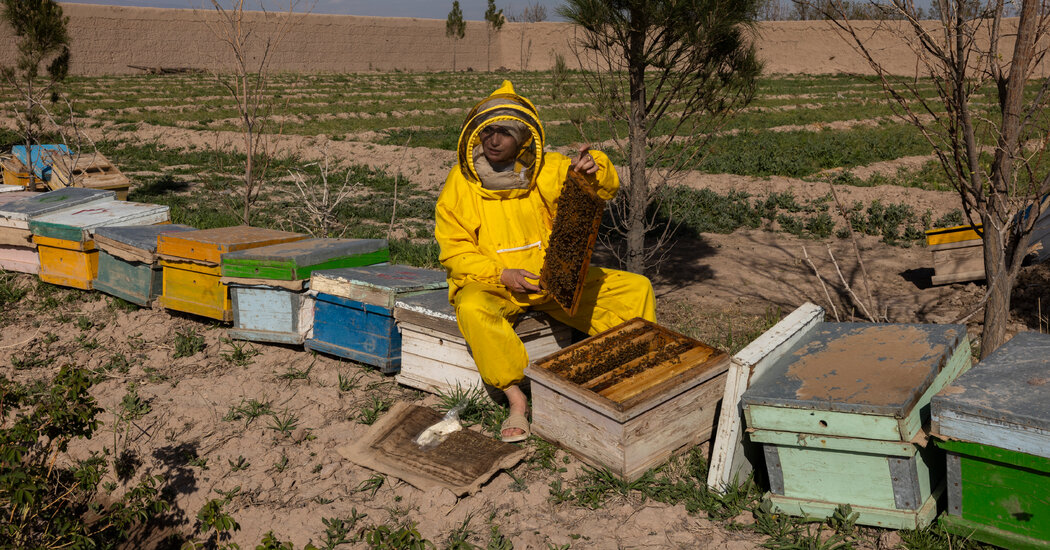
Ghoncha Karimi, nicknamed the “Bee Queen,” epitomizes defiance against the oppressive rules. She maintains her business by sometimes dressing as a man when traveling to manage her hives. Despite her efforts, she still faces setbacks, including a period of imprisonment for challenging the Taliban’s restrictions. These stories of female entrepreneurs underscore that while they may be creating opportunities, the social fabric is still tightly woven with control and limitations.
Government Support or Added Restrictions?
Afghan authorities claim to support women’s entrepreneurship through vocational training and other initiatives. However, critics argue that the measures are superficial and do not meet the real needs of the millions of women who need effective support to thrive in business.
Families are often at odds with women’s professional ambitions, creating additional obstacles. Some female entrepreneurs experience resistance in their homes, facing domestic abuse or cultural pressures that hinder their progress. Nevertheless, motivating success stories are emerging, with some women defeating societal expectations and paving new pathways for future generations.
What this means for you
The rise of women entrepreneurs in Afghanistan highlights the importance of understanding the legalities behind starting a business. If you ever need to review a business license or any related documents, legal-document-to-plain-english-translator/”>AI legalese decoder can help translate it into plain English in seconds. This story reminds us that legal knowledge can empower individuals to navigate complex systems, both at home and abroad.
Need to decode legal language? Try the free AI Legalese Decoder — no registration required.
Source: https://www.nytimes.com/2026/06/21/world/asia/women-taliban-restrictions-jobs-education.html

 ****** just grabbed a