
Why NASA Turned Off Part of Voyager 1 and Its Significance
- April 19, 2026
- Posted by: Alex Reed
- Category: Related News
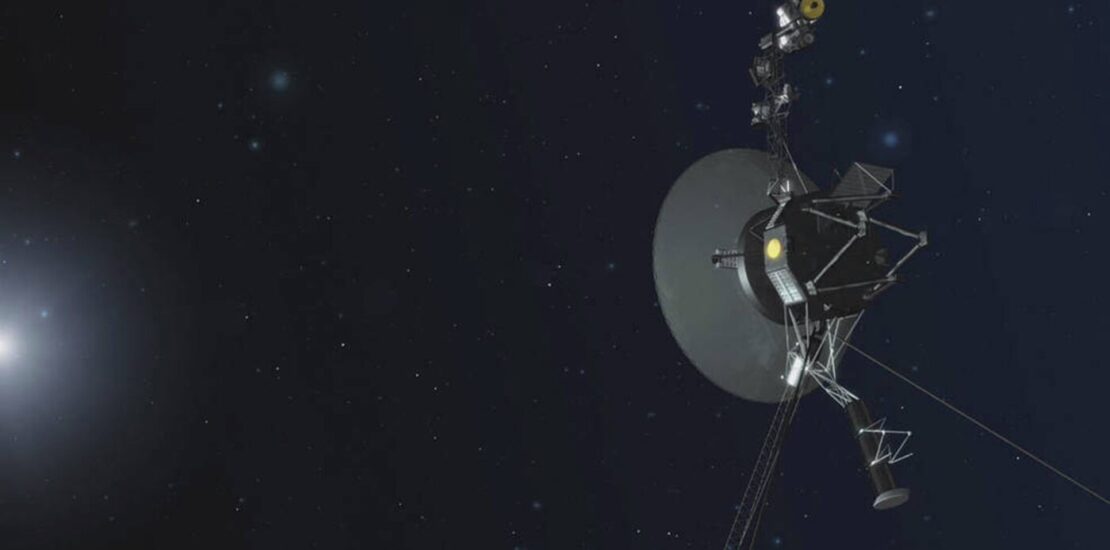
Nearly fifty years ago, NASA launched a spacecraft destined to explore the outer planets. Today, Voyager 1, the farthest human-made object from Earth, is still sending data, but its power is dwindling, prompting engineers to make tough decisions on how to extend its life.
The Journey of Voyager 1
Voyager 1 launched on September 5, 1977, from Cape Canaveral, carrying a mission to explore Jupiter and Saturn. Originally set to last five years, this incredible spacecraft has now operated for nearly ten times that amount. It has revealed stunning images of Jupiter’s volcanic moon Io and Saturn’s intricate rings.
The mission took advantage of a rare alignment of the outer planets, allowing Voyager 1 to use gravity assists. This meant it could gain speed and change direction without expending extra fuel. As a result, it not only completed its goals but went beyond, crossing into interstellar space in 2012.
Navigating Uncharted Territory
Today, Voyager 1 sits over 15 billion miles from Home. A radio signal from Earth takes more than 23 hours to reach the probe. The spacecraft operates on a radioisotope thermoelectric generator. This unique power source converts heat from decaying plutonium into electricity, but it loses about 4 watts every year. After almost fifty years, this gradual decline is coming to a critical point.
In February, the power levels unexpectedly dropped during a routine task. This critical moment put the spacecraft close to an automatic fault protection shutdown, which would have jeopardized the mission. Engineers acted quickly to shut down some systems, thus preserving the spacecraft’s main functions.
Making Sacrifices for Survival
On April 17, engineers deactivated the Low-energy Charged Particles (LECP) experiment, one of the remaining science instruments aboard Voyager 1. This decision was made carefully, as it was part of a prior plan to conserve power. The LECP has provided valuable data for mapping interstellar space, but turning it off was necessary for preserving other scientific activities.
Now, Voyager 1 continues on with two instruments still operational—one that listens for plasma waves and another that measures magnetic fields. These instruments are expected to keep functioning well into the 2030s and continue sending valuable information back to Earth.
The Voyager team is also planning a more extensive power conservation strategy, informally called “the Big Bang.” This approach would involve coordinating the shutdown of multiple components at once. If successful, it might allow some systems to continue operating longer.
A Legacy in the Stars
Both Voyager 1 and its twin, Voyager 2, represent incredible advancements in space exploration. Despite being designed for a brief mission, they have provided groundbreaking discoveries since their launch. As engineers continue their work, they remain hopeful that the spacecraft will stay functional for as long as possible. NASA’s evolving mission seeks to paint a clearer picture of the unknown territories beyond our solar system.
These long-lasting missions not only push the boundaries of human knowledge but also inspire generations to dream big about our place in the universe.
What this means for you
This story highlights the importance of vision and planning in any long-term project, including personal and professional goals. If you ever need to review contracts or agreements, you can use legal-document-to-plain-english-translator/”>AI legalese decoder to decode the fine print and ensure you’re making informed decisions.
Need to decode legal language? Try the free AI Legalese Decoder — no registration required.
Source: https://www.npr.org/2026/04/19/nx-s1-5789935/voyager-1-probe-nasa

 ****** just grabbed a