
Trump and Italy’s Meloni Clash Over Controversial G7 Photo
- June 20, 2026
- Posted by: Alex Reed
- Category: Related News
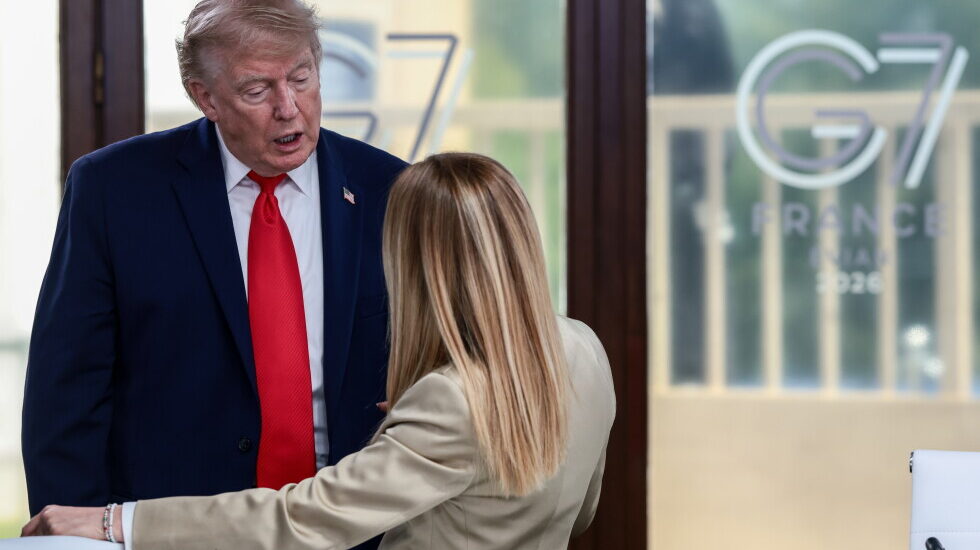
President Donald Trump’s recent comments about Italian Prime Minister Giorgia Meloni have sparked significant media attention, showing just how quickly diplomatic exchanges can turn sour. This spat matters because it reveals the complex interplay between world leaders and how their relationships can impact international policies, particularly in times of conflict.
What Started the Controversy?
The controversy began after Trump claimed that Meloni repeatedly “begged” for a photo with him during the recent Group of Seven (G7) summit held in France. During an interview with an Italian news outlet, he insisted that Meloni’s request for a picture was incessant. However, Meloni pushed back, labeling Trump’s claims as “completely fabricated.” This public disagreement escalated to the point where Italy’s foreign minister canceled a planned trip to the United States.
On social media, Trump reiterated his claims while at Camp David. Excited about the spotlight, he posted, “Italian Prime Minister Giorgia Meloni asked, over and over, for a picture with me during the G-7 meeting.” Despite initially misspelling her name, he corrected it in a later post. The dynamics of their interaction reveal not only personal tensions but also the seriousness of international relations.
Broader Implications of the Dispute
Trump’s remarks didn’t just stop at personal interactions. He also critiqued Meloni’s handling of military relationships, especially regarding support for the United States during the Iran war. According to Trump, Meloni’s government had not allowed the U.S. access to Italian military bases, even though Italy has historically been a crucial ally for American defense efforts. This criticism highlights ongoing concerns within NATO about member countries’ commitment to collaborating in defense strategies.
In March, Italy had declined to give permission for American bombers to utilize a military base in Sicily on the grounds that they needed parliamentary approval. Trump characterized this decision as a failure to support a critical ally. Such disagreements could signal a rift that may affect military logistics and cooperation between the two countries, particularly in future operations.
The Fallout from the Exchange
This public feud not only impacts diplomatic relations but also affects Meloni’s domestic standing in Italy. Trump noted her declining popularity, suggesting that it stems from her government’s choices, including refusing cooperation with the U.S. on military matters. By asserting that Meloni’s decisions could be damaging her popularity, Trump has inserted himself into the Italian political landscape, which might have broader implications.
Moreover, the Italian Prime Minister’s responses suggest she is determined to defend her government’s autonomy against foreign pressures. While the dynamics of their relationship might have been friendly before, this exchange has stoked tensions that could complicate future U.S.-Italy relations.
What This Means for You
So, what does this incident mean for ordinary citizens? Here are a couple of key takeaways:
-
Impact on International Relationships: Diplomatic disputes can affect everything from trade agreements to military partnerships. When leaders clash, the knock-on effects can touch the everyday lives of citizens.
-
Understanding Government Relations: As global politics unfold, it’s essential to stay informed about how these relationships influence local economies and national policies.
If you ever need to review important agreements or communications related to employment contracts or other legal documents, AI legalese decoder can help you decode the fine print quickly and effectively.
Need to decode legal language? Try the free AI Legalese Decoder — no registration required.
Source: https://apnews.com/article/trump-meloni-nato-italy-g7-photo-ab350c75202462f5da33a1eb0a761dd1

 ****** just grabbed a