
Transforming Patient Care: The Impact of Bedside PET Scanners
- June 5, 2026
- Posted by: Alex Reed
- Category: Related News
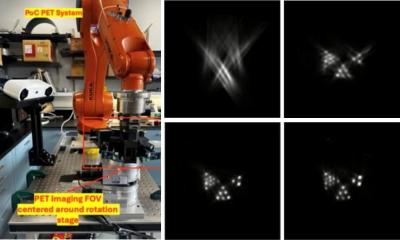
A new portable imaging device could revolutionize how doctors perform certain medical procedures. Imagine a world where complex scans are done quickly and efficiently, right at the bedside, making healthcare more accessible for everyone.
## The Need for Better Imaging
Interventional radiology procedures are key for diagnosing and treating various medical conditions. These minimally invasive procedures use imaging technologies like ultrasound, X-ray, and CT scans for guidance. While these techniques are standard, they have limitations. The current systems do not provide real-time updates, making accuracy a concern. Studies have shown that using PET scans alongside CT scans can improve accuracy, but they are often too expensive for many hospitals to adopt widely.
A team from Washington University in St. Louis aims to change this with a new portable Positron Emission Tomography (PET) device. This innovative tool can deliver real-time imaging, providing invaluable information rapidly. According to Yuan-Chuan Tai, a senior author of the study, this portable system could vastly improve the quality and speed of interventional radiology procedures.
## How the Portable PET Device Works
The impressive aspect of the new device is its design. It’s a point-of-care system equipped with a robotic arm capable of positioning detector panels anywhere needed. This flexibility allows it to image different organs, supporting a diverse range of medical situations. In recent studies, the device was tested using a phantom made of radiotracer-filled rods to assess its effectiveness.
The researchers utilized a method that involved moving the imaging panels to various user-selected positions. While capturing images, they used a real-time updating strategy, meaning they could refine their images as new data became available. This is groundbreaking since traditional PET imaging requires all data to be collected before generating an image.
## The Findings
The experiment revealed promising results. With this new approach, the image quality was comparable to that achieved through traditional methods. Researchers noted that after scanning just three to four positions, the structures in the images were clearly distinguishable. This indicates that medical professionals could potentially conclude scans early if they have enough data, saving both time and resources.
Graduate researcher Xiyan Li highlighted that this development represents a significant shift in how imaging can be conducted in medical settings. The real-time imaging capability opens doors for innovative applications that were previously not feasible due to technological restrictions.
## Next Steps in Research
As exciting as these developments are, the current system is still a prototype. Researchers are working on creating a version suitable for human trials, with plans to begin studies in 2027. This phase will further assess how the device can be integrated into everyday medical practices, particularly in emergency and bedside situations.
The key takeaway is that as this technology progresses, it could lead to faster and more accurate diagnostics, ultimately improving patient care. Eliminating delays in imaging could transform outcomes for patients needing urgent or targeted medical interventions.
## What this means for you
For everyday consumers, advancements in medical imaging can mean quicker diagnoses and treatments, leading to better health outcomes. If you ever need to review healthcare-related consent forms, legal-document-to-plain-english-translator/”>AI legalese decoder can help translate them into plain English in seconds. Understanding these documents is essential as healthcare continues to embrace new technologies.
Need to decode legal language? Try the free AI Legalese Decoder — no registration required.
Source: https://healthcare-in-europe.com/en/news/bedside-pet-scanner.html

 ****** just grabbed a