
Thieves Steal Almost $30K in Fireworks from Middleburg Business
- July 4, 2026
- Posted by: Alex Reed
- Category: Related News
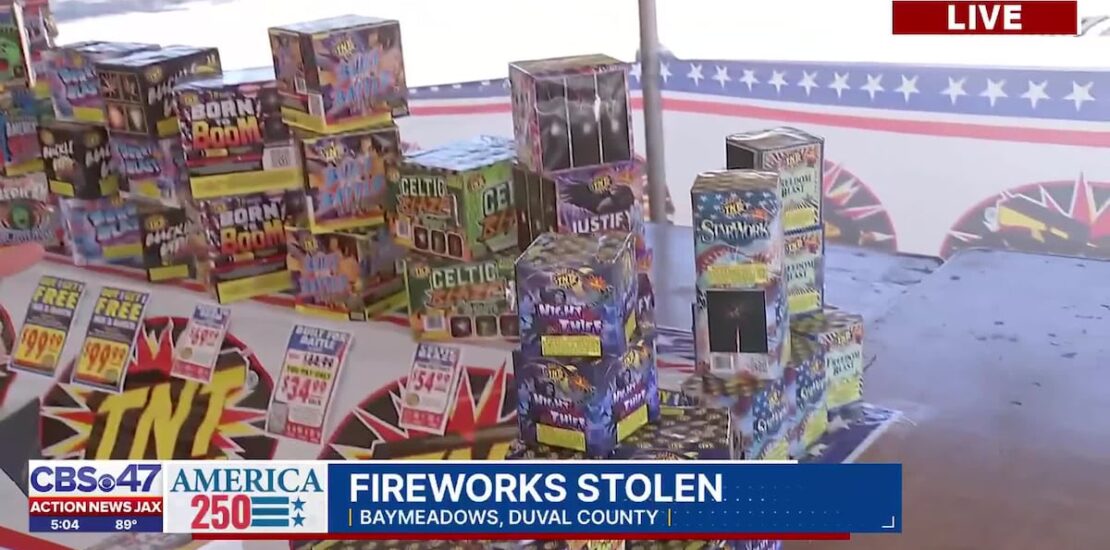
Unpatriotic thieves have spoiled the holiday spirit for a Middleburg mother in Jacksonville, Florida. When nearly $30,000 worth of fireworks were stolen from her temporary sales stand, it showcased how crime can hit businesses where it hurts most.
The Theft: A Shocking Discovery
The incident occurred early one morning when thieves cut through heavy-duty locks at a fireworks stand located in a Walmart parking lot. Approximately $28,000 worth of fireworks vanished overnight, leaving the stand’s operator, Juana Hovious, devastated. She and her friend took time off their hairstyling jobs, hoping to earn extra income during the holiday season. Just when they thought they could benefit from the festivities, they were faced with a costly setback.
“I walked over to our box and I noticed the lock was missing. My heart just dropped because I knew something had happened,” Hovious recounted. Unfortunately, her anticipation for a successful sales period turned into disappointment.
Hovious received her first shipment of fireworks just a day before the theft, making the situation even more disheartening. Investigators suggest the thieves may have made two trips in an SUV to transport the stolen goods, raising concerns about how easily such a significant crime can occur.
Implications for Business Owners
For Hovious, this theft isn’t just an emotional blow; it also has financial implications. Under TNT Fireworks’ policy, operators like her are often held financially responsible for any stolen inventory. Unless a specific contract relieves that responsibility or insurance covers the losses, she might face steep costs. This situation highlights the risks that seasonal business operators take when investing in inventory.
Hovious believes the stolen fireworks could eventually be resold. “I would imagine with that much money in fireworks, they would have to be selling them,” she speculated. The possibility of her products being sold on the black market only adds to her frustration.
Local authorities are working hard to solve this case. They are reviewing security footage from the Walmart and asking anyone with information to come forward. The community’s response could be pivotal in bringing the thieves to justice, but it also emphasizes the need for better security measures during high-demand times.
The Broader Issue of Holiday Crime
Crimes like this are not isolated incidents. Many small businesses often find themselves targets of theft during holiday seasons. With more shoppers out and about, opportunistic criminals see a chance to take advantage. Whether it’s a temporary fireworks stand or a permanent storefront, the stakes can be high.
For business owners, preparing for the holiday rush also means implementing preventive measures against theft. Such preparations could include hiring additional security, installing surveillance cameras, or ensuring adequate insurance coverage is in place.
As the investigation unfolds, it serves as a reminder to all small businesses to stay vigilant and proactive in protecting their investments. A little preparation could save them from a similar experience.
What this means for you
For consumers and small business owners alike, this story serves as a reminder of the importance of safeguarding against theft and loss. If you ever need to review any contracts regarding inventory or business operations, legal-document-to-plain-english-translator/”>AI legalese decoder can translate it into plain English in seconds. Stay informed and ensure you take the necessary steps to protect yourself and your investments during these busy times.
Need to decode legal language? Try the free AI Legalese Decoder — no registration required.

 ****** just grabbed a