
Supersonic Jet Hits Major Milestone with 990 mph Achievement
- April 18, 2026
- Posted by: Alex Reed
- Category: Related News
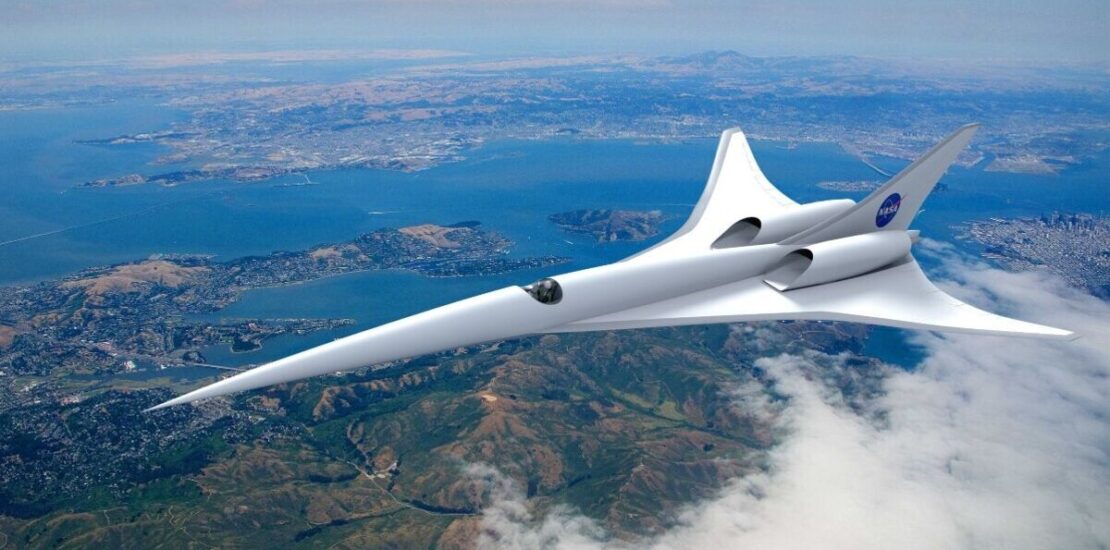
Flying faster than the speed of sound could soon become a reality for commercial travelers. NASA’s new X-59 aircraft has just made a significant advancement that could change the way we fly, making trips from cities like London to New York faster and quieter.
An Exciting Milestone for Supersonic Travel
The X-59 supersonic jet recently completed its first “wheels-up” flight test, marking a crucial step in its development. Unlike typical test flights where landing gear remains down, this test allowed engineers to examine the aircraft’s design in action. The X-59 is designed to fly at speeds exceeding 990 miles per hour, or Mach 1.5. If everything goes as planned, it could fly from London to New York in about three hours and 44 minutes—significantly shorter than the usual seven to eight hours.
The aircraft’s silent operation, producing only a gentle thump instead of a loud boom, aims to address the noise issues that have hindered supersonic flights over populated areas. This innovation has the potential to make supersonic travel a more viable option for commercial airlines.
The Legacy of Concorde
Many remember the Concorde, which could reach speeds of Mach 2.04, allowing for the same London to New York journey in just around three hours. However, the Concorde was retired partially due to noise complaints and operational costs. The X-59 is designed to be a game-changer by addressing these issues. Its quieter approach could open the doors for commercial supersonic travel over land, which has been largely prohibited due to noise regulations.
NASA’s X-59 builds upon this legacy, aiming to bring the thrilling experience of flying at supersonic speeds back to the commercial aviation sector, albeit in a quieter, more sustainable manner.
NASA has termed the X-59’s current initiative as the Quesst (Quiet Supersonic Technology) mission. This mission focuses on gathering data that can demonstrate the viability of quiet supersonic flight. Following successful initial tests, the aircraft is set to continue its flight envelope expansion campaign, which means it will be tested in various conditions to determine its full capabilities.
The pilot for this significant flight was NASA test pilot Jim “Clue” Less, who operated the X-59 from the Armstrong Flight Research Center in Edwards, California. During the 90-minute flight, the aircraft reached an altitude of 20,000 feet. Scientists at NASA believe that successful data from the X-59 tests can influence future aviation technology and regulatory policies surrounding supersonic flights.
The Future of Air Travel
As the X-59 continues to make progress, we can start to envision a future where air travel is not just faster but more enjoyable. Imagine flying from one major city to another in half the time while experiencing less noise during the flight. This development could lead to a revolution in commercial aviation, making it more efficient and appealing, especially for time-sensitive travelers.
The implications of this technology extend beyond just speed. The quieter operational capabilities of the X-59 could lead to new regulations allowing for expanded flight paths over populated areas, opening up more direct routes between major cities.
What this means for you
For regular travelers, the advances in supersonic technology could significantly cut down on flight times, making long-distance trips far more convenient. Additionally, if you ever need to review a flight contract or any travel-related documentation, AI legalese decoder can translate it into plain English in seconds. This could help you better understand your rights and responsibilities as a traveler, making your air travel experience even smoother.
Need to decode legal language? Try the free AI Legalese Decoder — no registration required.
Source: https://www.express.co.uk/news/science/2195704/nasa-supersonic-jet-passes-milestone

 ****** just grabbed a