
South Korean ‘Fake News’ Law Takes Effect Amid Journalists’ Concerns
- July 7, 2026
- Posted by: Alex Reed
- Category: Related News
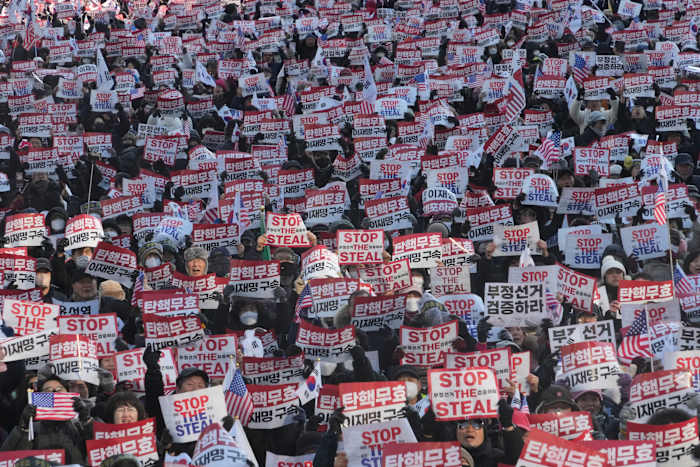
South Korea’s new law allowing significant penalties for spreading false information is stirring up serious concerns about free speech. As this law takes effect, everyday people must understand how it could impact what they read online and how they interact with news sources.
New Law Penalties for False Information
On Tuesday, South Korea began enforcing a law that imposes steep fines on news outlets and social media influencers for disseminating false information. This law can allow courts to award damages up to five times the proven losses against these entities. Essentially, if a news organization or a social media account shares information deemed illegal, false, or manipulated, they may face severe financial repercussions.
The law targets major platforms like YouTube, which must now take immediate actions, such as removing harmful content or suspending accounts upon reports of disinformation. The fine for knowingly sharing confirmed false information more than twice can reach up to 1 billion won, roughly $656,000. The aim of the lawmakers is to combat fake news, perceived as a growing threat to democracy.
Concerns From Journalists and Free Speech Advocates
Several journalistic organizations and civil rights groups have voiced significant alarm over this new legislation. They argue that the law is vaguely worded and lacks clear definitions regarding what constitutes harmful misinformation. Critics worry this ambiguity could lead to significant self-censorship among journalists, causing them to shy away from investigating critical topics related to government officials or big corporations.
The Journalists Association of Korea cautioned that the potential for large damage claims could deter reporters from openly criticizing those in power. “Even if a law’s objective is legitimate, it could erode the foundations of democracy,” they stated. This sentiment echoes the concerns expressed by the Seoul Foreign Correspondents’ Club, which fears that the law could stifle the public’s right to information and the media’s ability to hold power accountable.
The Dark Side of Censorship
Supporters of the law argue that these measures are necessary to clean up the misinformation that has plagued South Korea’s online environment, particularly after controversial events such as the brief martial law imposed by former President Yoon Suk Yeol in 2024. However, critics assert that this law might enable a form of censorship. They worry that private companies will act too cautiously and remove legitimate content to avoid liability.
This concern is magnified by the fact that internet companies are now placed in a position where they must regulate and monitor online discussions actively. A professor from Seoul’s Duksung Women’s University pointed out that this scenario could lead to excessive moderation, which may eliminate crucial dialogues about sensitive subjects.
Despite the fears surrounding censorship, the Korea Media and Communications Commission maintains that it will not be the government that decides what qualifies as false information. Instead, it relies on private operators of online platforms. The law does exempt reporting conducted in the public interest from damage claims, but how this will be interpreted remains unclear.
The Implications of Online Information
As the law takes effect, questions arise about how both South Korean and international platforms, like Google’s YouTube, will adapt. Major South Korean internet companies have started adjusting their systems to comply with the new regulations, but the response from foreign platforms is still uncertain.
This situation underscores a broader issue of how misinformation and regulations affect both freedom of speech and the integrity of information. For many, it may spark a greater caution in sharing articles or opinions online for fear of repercussions.
What this means for you
For regular people, this law highlights the importance of being cautious about what information is shared online. It serves as a reminder to verify news and sources before sharing content. If you ever need to review terms of service or policies regarding online content, you can use legal-document-to-plain-english-translator/”>AI legalese decoder to translate them into plain English quickly.
Need to decode legal language? Try the free AI Legalese Decoder — no registration required.

 ****** just grabbed a