
Shiba Inu Approaches Historic Drop Below 80 Trillion Threshold
- May 31, 2026
- Posted by: Alex Reed
- Category: Related News
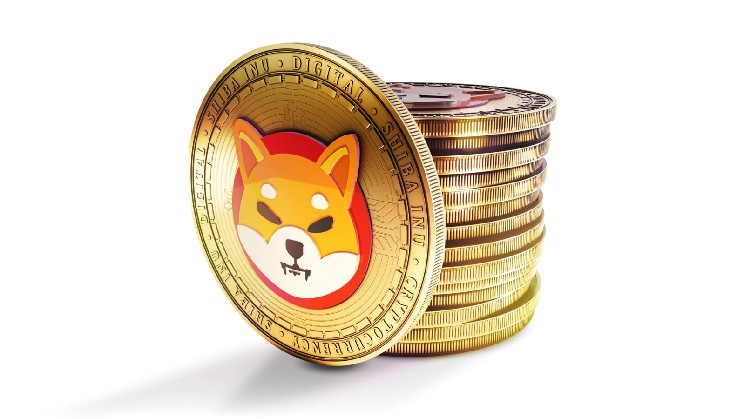
If you invest in cryptocurrencies or are just curious about them, you’ve likely heard of Shiba Inu ($SHIB). Recent data shows that the number of $SHIB tokens on exchanges might drop below a significant threshold, signaling potential changes for investors.
## What Are Exchange Reserves?
Exchange reserves indicate how much of a cryptocurrency is currently held on trading platforms. In the case of $SHIB, these reserves stand at around 80.03 trillion tokens. This amount is important because it serves as a benchmark for traders. When reserves decline, it often means investors are moving their coins to private wallets, suggesting they are less likely to sell. As a result, the liquid supply decreases, which can lead to price increases if demand remains steady or rises.
For a long time, the 80 trillion level has been a major focus for $SHIB investors. Having such a large number of tokens on exchanges created a potential risk of sell-offs for many years. With fewer tokens available for immediate sale, it might create a more favorable environment for prices to appreciate.
## Current Trends in $SHIB Reserves
The latest data shows that the inflow and outflow of $SHIB are largely balanced, keeping reserves just above the 80 trillion mark. While tokens continue to move in and out of exchanges, a gradual reduction in supply seems to be on the horizon. This trend is particularly interesting because it highlights a potential shift in how investors are interacting with $SHIB.
Moving $SHIB to personal wallets can be seen as a sign of confidence, suggesting that holders believe the asset will appreciate in value over time. If the current trend continues, we may soon see reserves dip below 80 trillion for the first time, marking a historic shift for the token.
## Stabilization and Future Prospects
Despite ongoing selling pressure, $SHIB is attempting to stabilize near a key support trendline, which has held strong in recent months. Technically, it is still trading below its major moving averages, specifically the 100-day and 200-day averages. However, the Relative Strength Index (RSI) has entered oversold territory, indicating that selling momentum may be slowing down.
Historically, when $SHIB has experienced oversold conditions along with improvements in its on-chain fundamentals, it has often led to significant price rebounds. Investors are keenly observing the current situation. A confirmed decline in exchange reserves below the 80 trillion threshold could solidify a promising long-term outlook for $SHIB.
## What this means for you
Understanding these changes is crucial for anyone involved in cryptocurrency. If you ever need to review the terms of your cryptocurrency investments or trades, legal-document-to-plain-english-translator/”>AI legalese decoder can help translate it into plain English in seconds. Being informed about market trends like these can help you make smarter financial decisions. Stay tuned to developments in the cryptocurrency sector, as they could impact your investment strategy.
Need to decode legal language? Try the free AI Legalese Decoder — no registration required.

 ****** just grabbed a