
Robotic Spacecraft Could Save Troubled Space Telescope From Falling
- July 1, 2026
- Posted by: Alex Reed
- Category: Related News
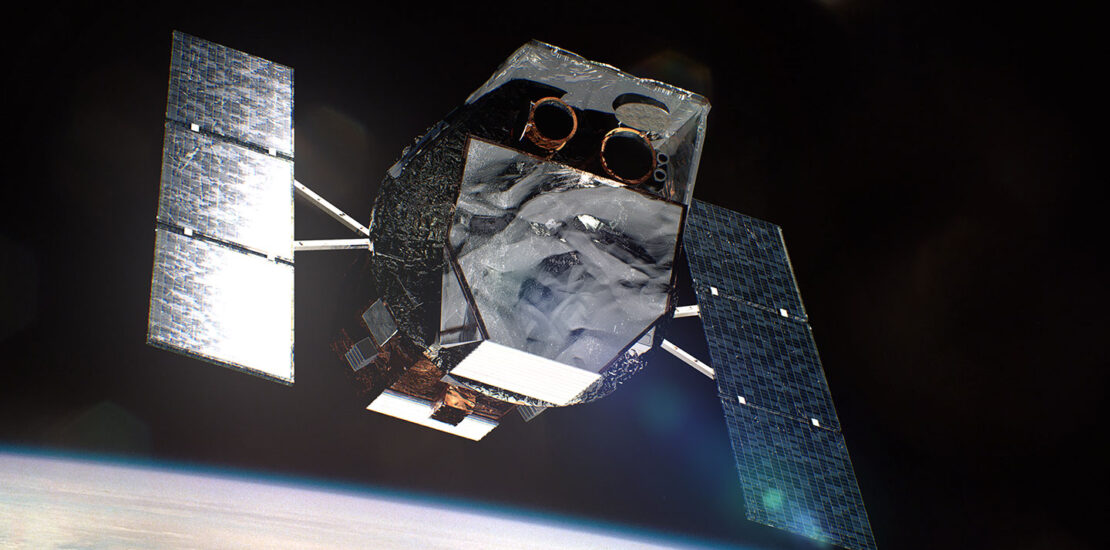
NASA is gearing up for a remarkable rescue mission that could change the way we view space telescopes. The agency is using a robotic tugboat to save the Swift space telescope from a fiery demise as it falls toward Earth. This effort matters because it showcases human ingenuity in preserving valuable scientific tools essential for our understanding of the universe.
The Last Chance for Swift
Launched in 2004, the Neil Gehrels Swift Observatory has been a key player in studying gamma-ray bursts and cosmic events. This telescope’s capabilities have led to numerous discoveries and insights into the universe’s mysteries. However, like all satellites, Swift is subject to the relentless pull of gravity. In 2025, scientists observed that Swift was descending faster than expected, mainly due to increased solar activity that expanded Earth’s atmosphere, causing more drag on satellites in low orbits.
As Swift began its countdown to reentry, NASA scientists realized that without intervention, the telescope would break apart in mid-2026, ending its valuable contributions to science. They decided that a first-of-its-kind, robotic rescue mission was necessary to bring Swift to safety.
The Robotic Rescue Mission
NASA selected a private aerospace firm, Katalyst, to execute this ambitious mission. The plan is straightforward but technologically challenging: a robotic spacecraft called LINK will be launched to grab Swift and pull it back into a safer orbit. It was a race against time, with only nine months for Katalyst to prepare the robot for the job.
On July 2, a rocket will take off from the Marshall Islands, carrying LINK into space for the mission. Once in space, LINK will take several weeks to ensure everything is functioning properly. After that, it will commence a slow approach to the Swift telescope, taking pictures to help the team identify the best spots to grab onto Swift.
A Glimmer of Hope for Astronomy
Once LINK successfully captures Swift, it will use gentle thrusters to gradually raise the telescope’s orbit over a span of months. The goal is to return Swift to its original operational altitude of about 600 kilometers, allowing it to continue its critical observations of the universe.
While the mission seeks to restore Swift’s scientific capabilities, the telescope’s operations team has adjusted its strategy in the meantime. They’ve altered Swift’s observing activities to decrease drag, which means for now, the telescope isn’t collecting scientific data. However, with a successful mission, Swift could resume operations, possibly unlocking ten more years of groundbreaking discoveries.
What this means for you
This mission raises the question of how innovative technology can extend the life of vital tools like the Swift telescope. If you ever need to review contract documents related to space or other industries, legal-document-to-plain-english-translator/”>AI legalese decoder can help you translate them into plain English in seconds. This way, you can better understand agreements that may concern areas like aerospace technology or scientific research.
Need to decode legal language? Try the free AI Legalese Decoder — no registration required.
Source: https://www.sciencenews.org/article/space-telescope-rescue-mission-nasa-swift

 ****** just grabbed a