
Pitt Researchers Launch Long-Awaited Cosmic Survey with Rubin Telescope
- June 30, 2026
- Posted by: Alex Reed
- Category: Related News
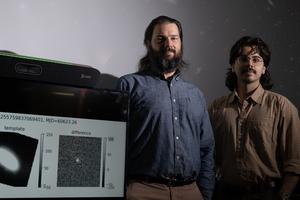
The night sky is set to become a new realm for discovery as a groundbreaking astronomical project kicks off. For the average person, this means a deeper understanding of our universe and potentially revolutionary insights into cosmic phenomena that could affect how we perceive everything from dark matter to asteroid threats.
Turning Observations into Alerts
The Vera C. Rubin Observatory recently launched its notification system, sending out over 800,000 alerts on its first night. These alerts are generated by a sophisticated alert broker system created by researchers at the University of Pittsburgh and Google. Each alert represents a change in the night sky, revealing everything from newly discovered asteroids to light from distant stellar explosions that occurred millions of years ago. This system will ensure that anyone interested in astronomy can stay informed about significant cosmic events.
But this is just the beginning of what the observatory aims to achieve. The official kick-off date for the Legacy Survey of Space and Time (LSST) is June 29, 2026. For the next ten years, the observatory will capture images of the entire southern sky every few nights, creating a high-definition time-lapse record of our universe. This ambitious project is about more than just looking up; it’s about expanding the frontiers of knowledge and making it accessible.
Decades in the Making
Research team members Jeff Newman and Michael Wood-Vasey have dedicated over 20 years to this project. Newman expressed his excitement about realizing concepts he has championed for decades. More recently, he has collaborated with fellow researchers to develop tools that will help measure distances to galaxies and turn the images captured by the observatory into three-dimensional maps.
Meanwhile, Wood-Vasey is on the hunt for Type Ia supernovae, a special kind of star explosion that could shed light on the mysterious nature of dark matter. Significantly, he has worked with Google and a graduate student to create a system that shares valuable data with anyone who wishes to explore it through the Pitt-Google Broker.
The Rubin Observatory’s efforts will ultimately result in two million images over the decade-long project, leading to 30 trillion measurements of various cosmic entities, including galaxies, stars, and asteroids.
Historic Insights and Future Possibilities
“It’s truly remarkable and emotional to see the LSST at the Rubin Observatory finally begin,” Wood-Vasey shared. For him, this accomplishment isn’t just academic; it embodies two decades of hard work and dedication. In his graduate research, he relied on only about 200 observations of Type Ia supernovae. Today, students have access to around 5,000 such observations, a number that will balloon into tens of thousands thanks to LSST.
Wood-Vasey and his team are not just focused on their research findings; they are eager to share the evolving story of our universe with the entire public in real time. This engagement will make astronomical research more transparent and accessible, allowing people from all walks of life to engage with the wonders of the universe.
What this means for you
The progress being made at the Rubin Observatory underscores the importance of keeping informed about scientific advancements, as they help us understand our world better. This is also a reminder that if you ever need to review any contracts or documents related to scientific collaborations, you can decode the fine print quickly with AI legalese decoder. By translating them into plain English, you can stay informed and empowered in your decisions.
Need to decode legal language? Try the free AI Legalese Decoder — no registration required.

 ****** just grabbed a