
Panama Faces Historic Ocean Lifeline Disappearance After 40 Years
- April 26, 2026
- Posted by: Alex Reed
- Category: Related News
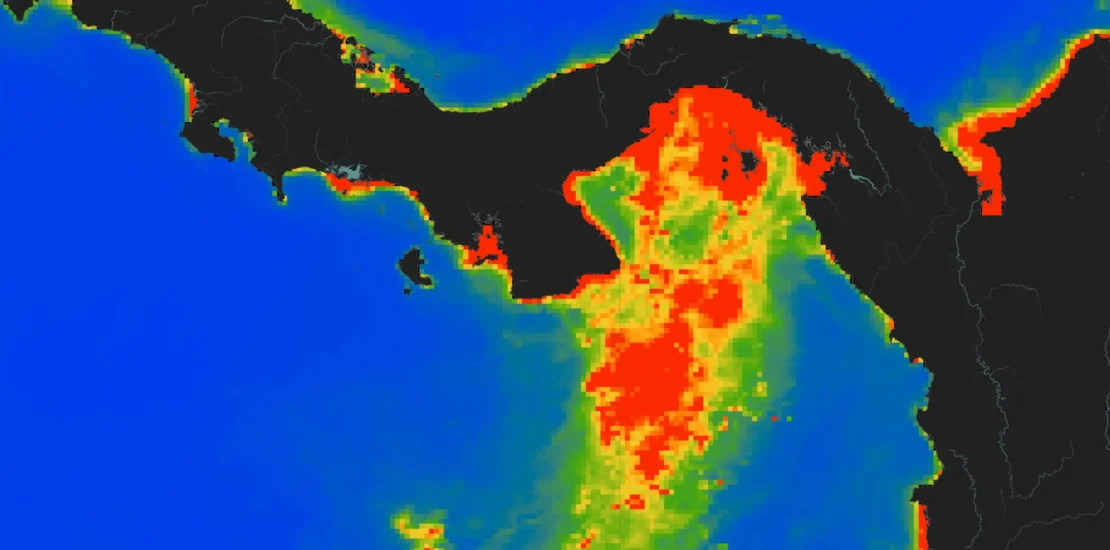
Each year in Central America, a natural process helps support marine life and the fishing economy. However, recent research indicates that climate change may be disrupting this vital system, which could have serious consequences for coastal communities.
Understanding Upwelling and Its Importance
During the dry season, which typically runs from December to April, strong northern trade winds push surface water in the Gulf of Panama. This movement allows colder, nutrient-rich water from the depths to rise, a process known as upwelling.
Upwelling is crucial for marine ecosystems. It boosts fish populations and keeps the water cooler along Panama’s Pacific beaches, making it a popular destination for tourists. Moreover, it helps to protect delicate coral reefs from heat stress. Without upwelling, vital fish nurseries may decline, impacting local fishermen and economies.
A Historic Change in Ocean Patterns
The Smithsonian Tropical Research Institute (STRI) has been monitoring this ocean process for decades. Their data shows that upwelling in the Gulf of Panama has been a reliable occurrence for at least 40 years—until 2025. For the first time in history, scientists observed that the upwelling failed to materialize.
The expected cooling of ocean waters did not occur, and the increase in marine productivity was absent. This abrupt change raises questions about underlying environmental factors that could affect fisheries and ecosystems in the region.
The Potential Impact of Weaker Winds
Recent studies published in the journal PNAS suggest that a significant drop in wind patterns may be behind this unusual occurrence. The scientists indicate that climate disruption can quickly alter fundamental ocean processes that have sustained fishing communities for generations.
While researchers are still working to understand the full implications of this failure, they warn that it could pose serious risks for both marine life and the livelihoods dependent on these fisheries. The necessity for further investigation into these changes is more pressing than ever.
Monitoring Ocean Changes
This discovery highlights the increasing vulnerability of tropical upwelling systems, which are vital for rich ecosystems and local economies. Despite their importance, many of these systems remain poorly monitored in various parts of the world.
The findings call for improved ocean climate observations and better forecasting abilities across tropical regions. Collaborative efforts, like those between the S/Y Eugen Seibold research vessel from the Max Planck Institute and STRI, are essential to understand these changes and develop new strategies for sustainability in ocean management.
What this means for you
Understanding ocean processes can have broader implications for our food supply and coastal living. If you ever need to review environmental documents related to marine policies, legal-document-to-plain-english-translator/”>AI legalese decoder can translate them into plain English quickly and efficiently. This helps you stay informed about important changes that could affect your community’s economy and natural resources.
Need to decode legal language? Try the free AI Legalese Decoder — no registration required.
Source: https://www.sciencedaily.com/releases/2026/04/260426012253.htm

 ****** just grabbed a