
Navy Medicine Strengthens Focus on Trauma Care Excellence
- April 28, 2026
- Posted by: Alex Reed
- Category: Related News
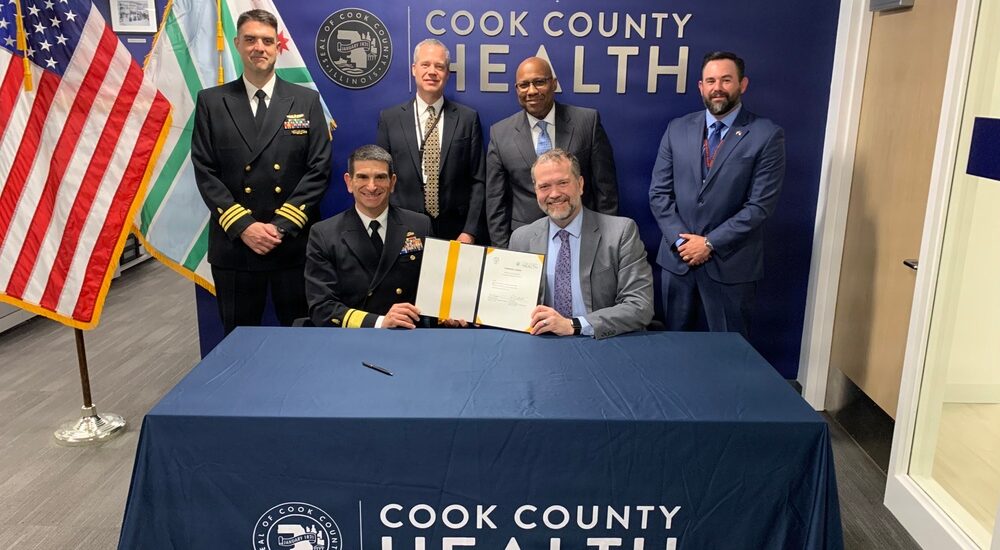
Navy Medicine’s partnership with Cook County Health is more than just a formal agreement; it impacts how trauma care is delivered to both military personnel and civilians. This collaboration not only enhances the skills of medical teams but also ensures critical support during emergencies.
A Historic Partnership
The collaboration between Navy Medicine and Cook County Health (CCH) stretches back to 2013. It all started when naval surgeons from the Lovell Federal Health Care Center began training at Stroger Hospital, the nation’s first comprehensive trauma center. This program aimed to equip military medical staff with high-level trauma care skills.
In 2017, the Navy launched its first corpsman trauma training program at Stroger Hospital. Since then, Navy medical professionals have regularly rotated through the trauma unit, gaining valuable experience in real-world situations.
This partnership has grown significantly over the years, providing military personnel with the chance to learn alongside experienced civilian medical staff. The trauma unit at Stroger Hospital handles over 4,000 cases annually, with a substantial portion involving severe injuries from incidents like gun or knife attacks.
Training That Saves Lives
During a recent signing ceremony, Rear Adm. Rick Freedman, the acting U.S. Navy surgeon general, highlighted the importance of this partnership in training military teams. He noted that the program has been instrumental in saving lives, especially for expeditionary resuscitative surgical systems. These teams are prepared to operate in challenging environments, delivering emergency care where it is needed most.
“The success is directly linked to everyone’s hard work and dedication,” Freedman emphasized. This collaboration ensures that Navy medical teams stay sharp and ready to respond to trauma cases, which are often unpredictable and demanding.
Dr. Erik Mikaitis, the CEO of CCH, reaffirmed the importance of this partnership, stating it elevates trauma care for both military and civilian patients. The focus is on providing high-quality clinical support, ensuring that patients receive the best care possible.
Benefits of the Military-Civilian Partnership
This military-civilian partnership is designed to refine and maintain the critical skills of expeditionary medical teams. It allows Navy medical professionals to practice and learn in a setting that handles diverse and challenging cases.
The trauma unit in Stroger Hospital frequently deals with penetrating injuries that require immediate and expert attention. By giving Navy teams access to such intensive medical environments, both sides can benefit significantly.
This approach not only keeps military personnel prepared for emergencies but also improves trauma care for civilians. Access to high-quality medical training means better outcomes during crises, whether at home or during deployed operations.
What this means for you
This partnership highlights the importance of effective healthcare systems working together during emergencies. It shows that preparedness can save lives, not just in military contexts but for everyone. If you ever need to review medical consent documents, AI legalese decoder can decode the fine print into plain English in seconds.
Need to decode legal language? Try the free AI Legalese Decoder — no registration required.
Source: https://www.dvidshub.net/news/563812/navy-medicine-renews-commitment-excellence-trauma-care

 ****** just grabbed a