
Mali’s Military Leaders Face Uncertain Future After Rebel Offensive
- April 29, 2026
- Posted by: Alex Reed
- Category: Related News
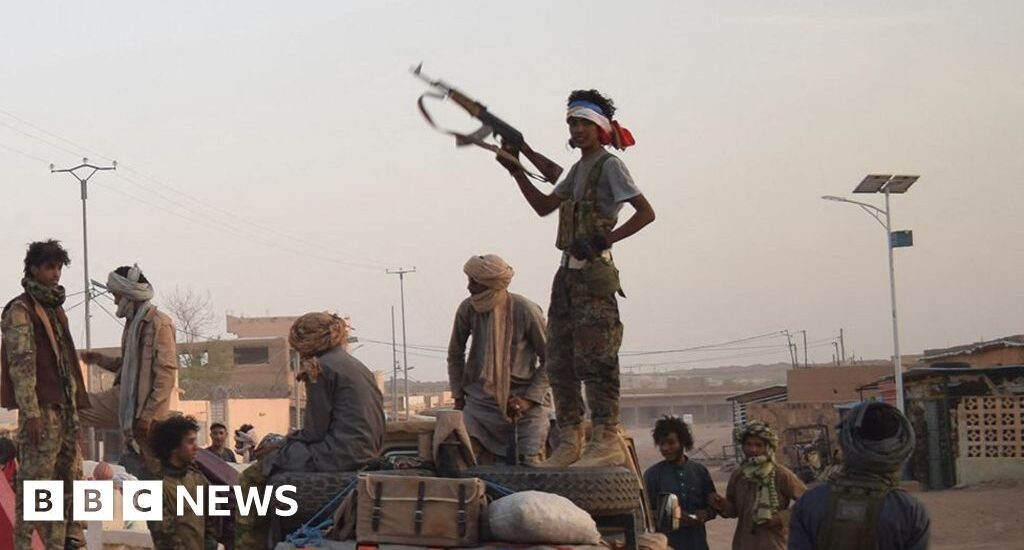
The ongoing conflict in Mali is more than just a geopolitical issue; it directly influences global stability and safety. For the average person, understanding these events helps grasp how international relations can impact daily life, from energy prices to migration trends.
The Rising Tensions in Mali
Mali has found itself at the center of a turbulent power struggle that combines local rebel movements with international interests. Recently, separatist groups and jihadist factions launched a daring offensive against the military junta that took power in 2020. This was a significant blow not only to the junta but also to the opposing forces backed by Russia. Their efforts, part of a broader strategy to expand influence in Africa, have hit a snag, raising questions about the future of Mali’s governance.
The rebel offensive has had immediate consequences for the military leaders in Mali. The junta, led by Colonel Assimi Goita, has faced criticism for its inability to manage the security situation. Following the attacks, Goita stated that the situation was under control, emphasizing resilience in the face of adversity. However, the challenges remain daunting, with rebels continuing to assert their presence in the region.
International Implications
This struggle has significant implications beyond Mali’s borders. Russia’s involvement in the country showcases its attempts to carve out a foothold in Africa, competing with Western influence. Their support for the Malian junta through military training and equipment is part of a broader strategy to establish alliances with governments in conflict, promoting their agenda on the continent.
The recent rebel success has raised alarms about the effectiveness of Russian support. It has exposed vulnerabilities in the junta’s defenses and highlights the complexity of foreign partnerships in conflict regions. As the struggle intensifies, questions arise about what will happen to Mali and how it may affect international relations across Africa.
Future of Mali’s Governance
Looking ahead, the situation in Mali carries uncertain outcomes for its governance and the well-being of its citizens. The junta must now respond to the recent attacks and restore confidence among its people. Failure to do so could lead to increased instability, pushing citizens towards further unrest or rebellion.
On the other hand, the opposition groups may use this momentum to push for political change or autonomy, leading to increased demands from different factions within the society. The stakes are high, not only for those living in Mali but also for nations observing the situation closely.
What this means for you
Understanding international conflicts like this helps us grasp how far-reaching these issues can be, influencing everything from global markets to immigration patterns. If you ever need to review any documents related to employment contracts, AI legalese decoder can translate it into plain English in seconds. Keep informed; the world is increasingly interconnected, and these local issues can quickly have global repercussions.
Need to decode legal language? Try the free AI Legalese Decoder — no registration required.

 ****** just grabbed a