
How Trees Provide Natural Protection for Homes During Storms
- June 5, 2026
- Posted by: Alex Reed
- Category: Related News
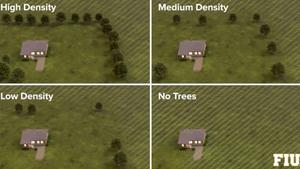
Homeowners often worry about the risks associated with trees during storms, especially in places like Florida prone to hurricanes. Recent research shows that certain trees can significantly protect homes from extreme winds, making this discovery valuable for safeguarding lives and property.
Understanding the Role of Trees in Hurricanes
Researchers from Florida International University (FIU) have conducted an extensive study on the impact of trees during storm events. Their findings reveal that some common trees can decrease wind pressure on homes by nearly 50%. This research offers hope for homeowners looking to bolster their defenses against severe weather while also highlighting the potential risks posed by trees during hurricanes.
Miami-Dade County is already home to around 36 million trees, and urban planners are eager to increase this number. These trees provide shade and beauty but can also be dangerous during storms. The challenge, then, is determining which trees serve as protective barriers and which could become hazards when strong winds hit.
Insights from Extensive Research
The research team went above and beyond to collect data on over 40,000 trees across Florida. They aimed to understand how various tree species interact with extreme winds and affect nearby homes. Testing took place at FIU’s Wall of Wind, a facility capable of simulating a Category 5 hurricane.
The study categorized trees based on their vulnerability to wind. The least vulnerable deciduous tree was identified as Mahogany, while Slash Pine topped the list for conifers. In contrast, the Water Oak was deemed the most vulnerable overall. Such findings help homeowners choose better tree species for their landscapes.
The research originated from questions raised by partners in insurance and construction industries. They sought to grasp how trees influence the risk of damage during extreme winds. By using two basic inputs—tree species and crown diameter—the researchers could estimate what other characteristics are necessary for predicting tree failure in such conditions.
Planting Trees Wisely for Maximum Protection
The results of the study are promising for homeowners planning their landscaping. Placement of trees around homes can drastically reduce wind pressure on structures, leading to lesser damage during storms. However, the research also revealed that in certain wind directions, trees might actually increase pressure on buildings.
Surprisingly, wind hitting structures at specific angles showed increased pressure on walls and roofs. The researchers suspect that the arrangement of trees may create a wind tunnel effect, but further studies are needed to confirm this. These insights could guide homeowners in choosing not just which trees to plant, but also where to plant them effectively.
Insurance companies could leverage these models to assess potential risks from trees near properties. The implications extend to better pricing of insurance policies, clarifying coverage options, and even determining insurability.
Broader Implications for Communities
The findings from this research aren’t just beneficial for individuals. Emergency management agencies, utility providers, and local governments can also take advantage of these insights. They can estimate potential tree debris in the aftermath of storms, which will help in planning for road closures and anticipating disruptions to power lines and transportation networks.
Further research will focus on how tree failures can directly damage homes during extreme wind events. This ongoing work will help refine risk assessment models and offer guidance to homeowners wanting to plant trees that can withstand high winds.
The ultimate goal is to foster more resilient communities capable of effectively preparing for and responding to severe wind events.
What this means for you
Here are a few practical takeaways from this research:
– Choosing the right trees and their placement can greatly reduce wind damage to your home.
– Understanding how trees interact with storm winds can also affect insurance premiums.
– If you ever need to review terms in documents related to property, such as insurance policies, legal-document-to-plain-english-translator/”>AI legalese decoder can translate it into plain English in seconds.
Need to decode legal language? Try the free AI Legalese Decoder — no registration required.

 ****** just grabbed a