
How Social Robots Can Alleviate Children’s Anxiety at Doctor Visits
- June 23, 2026
- Posted by: Alex Reed
- Category: Related News
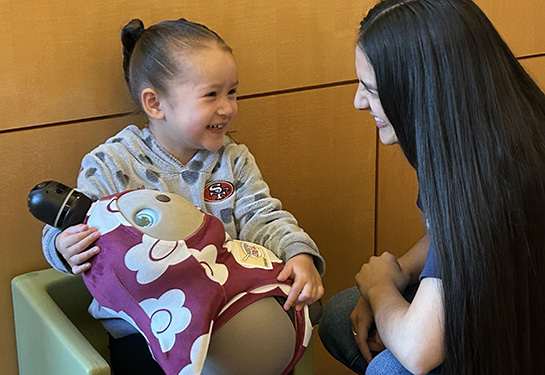
When a child has a medical appointment, it can feel stressful for both the little one and their family. But what if a cuddly robot could ease that anxiety and make the experience a little more pleasant? Recent innovations at the UC Davis MIND Institute suggest that social robots might be the key to transforming the waiting room experience.
Meet the LOVOTS: Friendly Little Helpers
During a recent visit to the UC Davis MIND Institute, three-year-old Cameron encountered two social robots named LOVOTS. These robots are designed to be cute and interactive, standing about a foot and a half tall with big, round eyes and colorful plush bodies. Cameron’s mom, Caroline Nguyen, described the joyful surprise of seeing the robots. “They’re so adorable, and the little sounds they make—she took to them right away,” she said.
These lovable companions are equipped with touch sensors and cameras that allow them to respond to human interaction. Alondra Gonzalez, a clinical research coordinator at the Institute, explained that the LOVOTS can enjoy being cuddled and are programmed to react to the people around them. This unique blend of technology aims to create a comforting atmosphere for children who often feel anxious in medical settings.
A Study in Calm: Testing the Impact of Social Robots
The main goal of this initiative is to see if these lively robots can help calm children before their medical appointments. Veronica Ahumada, an assistant professor and head of the study, believes the presence of LOVOTS may reduce feelings of stress and anxiety in young patients. “We wanted to see if having these friendly, assistive robots in the waiting room could reduce stress or anxiety children may be feeling,” she said.
This research represents a pioneering effort to evaluate social robots within pediatric healthcare environments. Ahumada is dedicated to exploring how technology can enhance human connections, particularly in stressful situations like medical appointments.
Robot Friends on the Move
Four LOVOTS—Cocoa, Jellybean, Cereal, and Toffee—are currently on loan from a Japanese company, Groove X. They regularly visit the MIND Institute, bringing a bit of joy to the waiting area several times a week. Gonzalez has seen firsthand how the LOVOTS attract the attention of children. “Usually a kid will run up to one of them,” she noted.
Although the robots only understand Japanese commands, Gonzalez teaches the kids simple phrases to engage with them. As part of this pilot study, families provide feedback on their interactions with the LOVOTS, helping the researchers gather valuable data.
To ensure patient privacy, the robots do not record interactions, and human staff is present to take notes on the children’s experiences.
Positive Reactions and Rewards
The reactions from young patients have been heartwarming. Many children interact with the LOVOTS by hugging or even carrying them around. Some find comfort by simply petting the robots. According to Ahumada, “If you stroke their tummies, their eyes start to droop, and they start to purr and fall asleep.”
Cameron enjoyed singing to Cereal during her visit. Her mom mentioned that she came in feeling nervous about her blood draw, but after engaging with the LOVOTS, she was in much better spirits. “She completely forgot about that and was just in play mode,” Nguyen said. This shift in mood likely contributed to a smoother experience during the medical procedure.
The LOVOTS will remain at the MIND Institute for several more weeks, after which the research team will analyze the results and consider future applications. “Our goal is to use technologies to increase human connectedness,” Ahumada said, emphasizing the importance of human experiences, even in technologically advanced settings.
What this means for you
The excitement around robots like the LOVOTS shows how technology can help ease anxiety in stressful environments. If you ever need to review medical consent documents, legal-document-to-plain-english-translator/”>AI legalese decoder can translate it into plain English in seconds. Understanding these documents can help you approach medical appointments with more confidence.
Need to decode legal language? Try the free AI Legalese Decoder — no registration required.

 ****** just grabbed a