
Heatwave over holiday weekend impacts downtown business activity
- July 2, 2026
- Posted by: Alex Reed
- Category: Related News
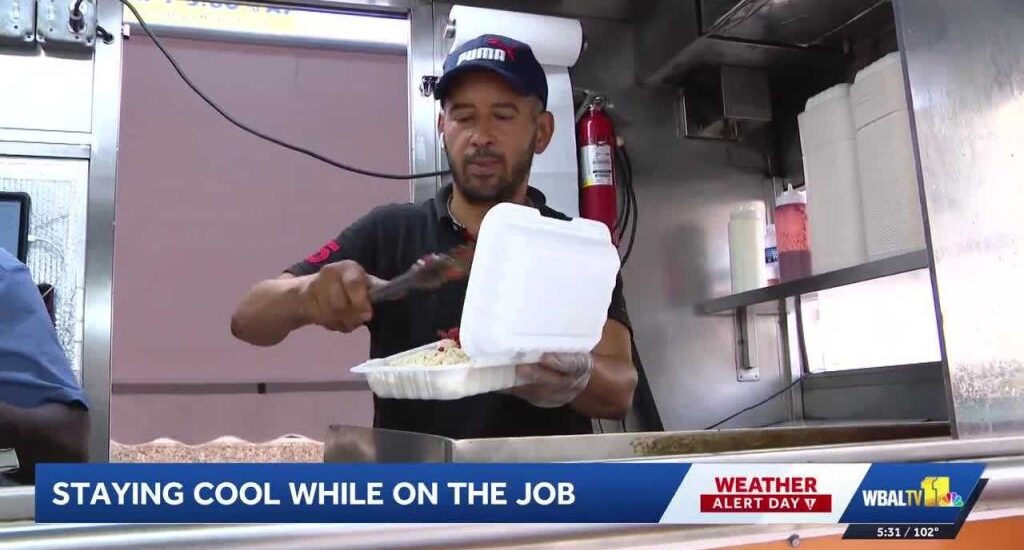
Businesses in Downtown Baltimore are feeling the strain as temperatures soar past 100 degrees this week. For many vendors and restaurants, adapting to these extreme conditions is crucial not just for operations, but also to keep customers coming through the doors.
Food Vendors Push On
Amid the sweltering heat, food vendors are determined to continue serving the community. Aziz Mousa, who runs a food truck, is committed to keeping his business open. However, he faces challenges as business slows during peak heat hours. “Not much (business), especially in the evening,” Mousa explains. The extreme heat has forced many operators to rethink their strategies.
Vendors like Ezzka are still offering a variety of dishes, working hard despite the uncomfortable conditions. “Chicken, lamb with rice, falafel, hot dogs, wraps, gyros—anything,” he lists. To combat the heat, hydration is key. Ezzka mentions he drinks an assortment of beverages to stay cool, while Mousa admits to consuming “at least 10 bottles” of water each day.
The willingness of these vendors to endure the heat shows their dedication, but it also raises questions about working conditions in extreme weather.
Delivery Drivers Feel the Heat
It’s not just food vendors who are affected. Delivery drivers, particularly those on bicycles, are left to fend off the scorching sun. One driver simply remarked, “Very hot today.” The impact of the heat is hard to ignore, as those in outdoor jobs bear the brunt of the elements without much respite.
In Fells Point, preparations are underway for the Fourth of July holiday weekend, yet the glaring sun takes a toll. Benches and tables sit empty as patrons choose indoor seating to escape the heat. Even event coordinators, such as Rachel Beller from Kooper’s Tavern, note that outdoor operations are suffering.
“Patio service will be slower today,” Beller shared. The Tavern has opted not to run its food truck, citing dangerously high temperatures inside. “It’s probably like 120 degrees inside the truck,” she revealed. The equipment generates immense heat, making it feel like an oven for anyone working inside.
Dining Preferences Shift Indoors
As outdoor dining takes a hit, many restaurants are adapting by focusing on indoor experiences. Beller remarked, “Who wants to go outside and eat a burger in this? I mean, come inside.” The reliance on air conditioning has become a critical factor for restaurants trying to keep their customers comfortable and safe.
This shift could have lasting effects on how businesses operate during the summer months. Many establishments may need to evaluate how they prepare for extreme weather in the future.
Adapting to Extreme Conditions
The extreme weather conditions have forced many businesses to reconsider their outdoor strategies. While some are finding ways to keep serving customers, others are facing tough choices about how to operate safely.
The situation highlights the importance of flexibility and resilience in business, particularly in industries reliant on outdoor activities. Employees are also calling attention to safety in extreme heat, emphasizing the need for protective measures.
The current heat wave serves as a reminder of the various challenges that businesses face, from customer preferences to employee safety.
What this means for you
As weather conditions fluctuate, it’s crucial for all workers to be aware of their rights in extreme conditions. If you ever need to review work environment policies or employee contracts, AI legalese decoder can help decode the fine print in seconds. Always prioritize safety and comfort during extreme weather!
Need to decode legal language? Try the free AI Legalese Decoder — no registration required.
Source: https://www.wbal.com/holiday-weekend-heat-slows-business-downtown

 ****** just grabbed a