
G7 Leaders Express Support for US-Iran Agreement Amid Draft Release
- June 17, 2026
- Posted by: Alex Reed
- Category: Related News
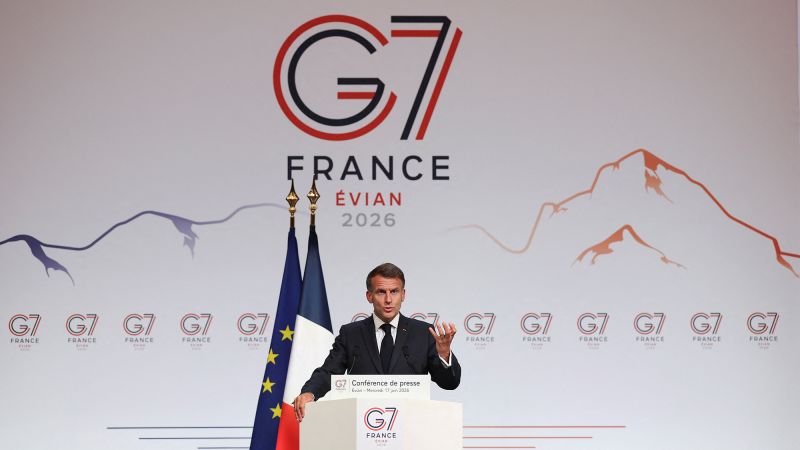
Today marks a significant event as the G7 summit in Évian-les-Bains, France, wraps up its discussions. This gathering of some of the world’s largest economies, including the United States and Canada, impacts global policy, which can influence everyday lives—from prices to international relations.
The G7: An Overview
The Group of Seven, or G7, is an informal assembly made up of the largest economies in the world: Canada, France, Germany, Italy, Japan, the United Kingdom, and the United States. Established in the 1970s, it was initially known as the “Library Group.” This group began with meetings aimed at stabilizing economic tensions among member nations, particularly concerning currency and finance.
As global challenges grew more complex, the G7 evolved from informal discussions among finance ministers to annual summits where heads of state address pressing issues. The transformation took place in 1975 when Japan joined the group, leading to discussions that would now include higher-level representatives, underscoring a shift toward cooperative policymaking.
Key Issues on the Agenda
Each year, the G7 summit dives into critical topics affecting the global community. This year, the meetings focused heavily on the recent agreement between the United States and Iran, which has the potential to reshape diplomatic relations and affect international markets.
The discussions extended beyond the immediate economic policies. They also touched on broader issues such as climate change, international security, and public health. The presence of additional leaders from countries like Egypt, Brazil, and South Korea reflects the summit’s growing influence, as these nations also face substantial challenges that impact their economies and societies.
The Role of the European Union and Other Nations
In addition to the G7 countries, the European Union plays a critical role at the summit. Leaders such as António Costa, President of the European Council, and Ursula von der Leyen, President of the European Commission, attended this year’s discussions. Their input adds a layer of complexity, as EU policies often intersect with member nations’ strategies.
The invitation extended to countries like India and the United Arab Emirates shows the G7’s intent to foster collaborations beyond its core members. These partnerships are strategic, allowing for a broader dialogue on economic development and global governance.
Why This Matters
The outcomes of the G7 meetings can lead to significant changes in policy that affect people around the world. Decisions made at these summits do not exist in a vacuum; they can influence everything from inflation rates to international trade agreements. Even the everyday consumer can feel these impacts directly, making it crucial to stay informed about what transpires during such high-level discussions.
The suspension of Russia from the G8 in 2014 is a reminder of how geopolitical events can shift global dynamics. The ramifications of these shifts are often felt in local communities, demonstrating the interconnectedness of the world’s economies.
What this means for you
As global policies evolve, understanding their implications can be beneficial. Paying attention to international agreements can help you make informed decisions in your daily life. If you ever need to review agreements or contracts, like a waiver or an employment agreement, legal-document-to-plain-english-translator/”>AI legalese decoder can decode the fine print and translate it into plain English in seconds. This empowers you to better understand your rights and obligations in a complicated world.
Need to decode legal language? Try the free AI Legalese Decoder — no registration required.
Source: https://www.cnn.com/2026/06/17/world/live-news/iran-war-g7-summit

 ****** just grabbed a