
Exploring Habitat Mapping Techniques in the Lord Howe Island Lagoon
- May 24, 2026
- Posted by: Alex Reed
- Category: Related News
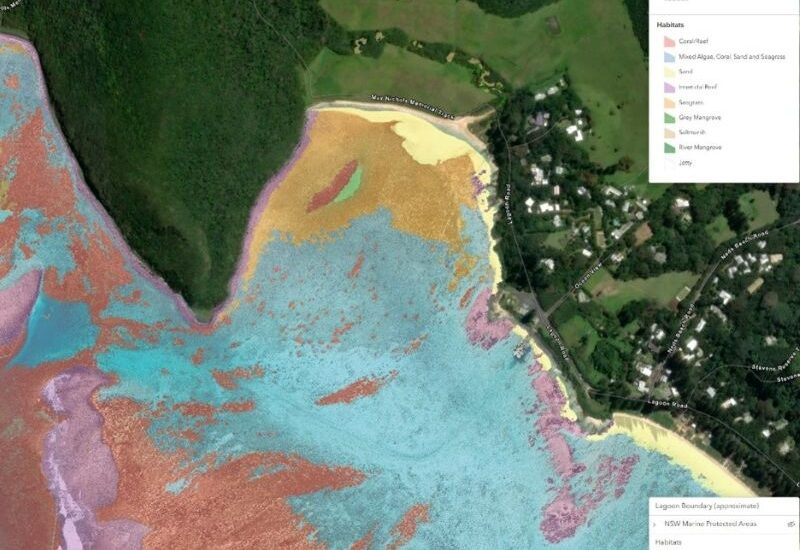
Marine habitat maps are essential in helping us understand and protect our oceans. The latest advancements in technology are making these maps more accurate, which ultimately means better management of precious marine ecosystems.
Understanding the Importance of Marine Habitat Maps
Marine habitat maps, particularly for significant areas like the Lord Howe Island Marine Park (LHIMP), serve as valuable tools for scientists and environmentalists. The LHIMP includes the Lord Howe Island lagoon, which is renowned for having the world’s southernmost coral reef. This lagoon features a diverse array of habitats, such as coral gardens, seaweed reefs, and seagrass beds. These ecosystems not only support a variety of marine life but also help maintain the overall health of our oceans.
Researchers have been creating marine habitat maps of this unique area since the 1970s. In the earlier days, these maps were manually drawn using aerial photographs and surveys from snorkelers and divers. Today, new technologies—like high-resolution cameras, drones, and artificial intelligence—allow for mapping that is both precise and efficient. This shift makes it easier for growth areas and threats to be monitored effectively.
Advancements in Mapping Technologies
The newest habitat map for the Lord Howe Island lagoon was created in 2023, using advanced aerial imagery captured from low-altitude aircraft. This project was funded by the NSW Department of Primary Industries and Regional Development and the Lord Howe Island Board. Staff members from the NSW DPIRD identified key habitat types, and these were then mapped using innovative techniques such as Object Based Image Analysis coupled with Convolutional Neural Networks.
These technical methods make use of artificial intelligence designed to recognize imagery based on characteristics like pixel appearance and recurring patterns. After initial automatic classification, experts further refined the map through manual checking and cleaning. As a result, the map provides detailed information that can be instrumental for ecological research and conservation efforts.
Applications for Marine Conservation
This new habitat map will significantly aid in research, monitoring, and planning for conservation efforts. For instance, it will allow scientists to quantify the areas of various habitats, determine suitable locations for recreational and conservation activities, and evaluate changes or impacts on different ecosystems.
Ongoing mapping using drones complements the comprehensive lagoon map. This ongoing work, in collaboration with Southern Cross University, targets specific areas for rapid, cost-effective assessments at regular intervals. Such maps are crucial for tracking ecological trends, such as coral bleaching and recovery from heatwaves, which have dramatically affected marine life.
Researchers have also developed methods to detect the difference between healthy coral and bleached coral with remarkable detail. One challenge they face is training AI to accurately distinguish bleached coral from reflections caused by sunlight on the water’s surface.
Future Directions in Marine Research
The integration of drone technology and artificial intelligence not only streamlines the mapping process but also enhances our understanding of critical ecological changes. The ongoing assessments help monitor coral mortality events triggered by environmental stressors and observe shifts in seaweed growth patterns.
Proactive mapping enables researchers, policymakers, and conservationists to address the impacts of climate change and human activity in marine environments effectively. By continuously updating these maps, stakeholders can better plan conservation strategies and interventions that protect marine biodiversity.
What this means for you
The advancements in marine habitat mapping remind us of the necessity of preserving our oceans. For those involved in environmental efforts or simply interested in marine life, understanding these developments is crucial. If you ever need to review relevant documents like environmental permits, legal-document-to-plain-english-translator/”>AI legalese decoder can help translate them into plain English in seconds.
Need to decode legal language? Try the free AI Legalese Decoder — no registration required.
Source: https://www.marinebusinessnews.com.au/2026/05/habitat-mapping-in-the-lord-howe-island-lagoon/

 ****** just grabbed a