
Europa’s Water Venting Mystery: New Findings Challenge Assumptions
- May 29, 2026
- Posted by: Alex Reed
- Category: Related News
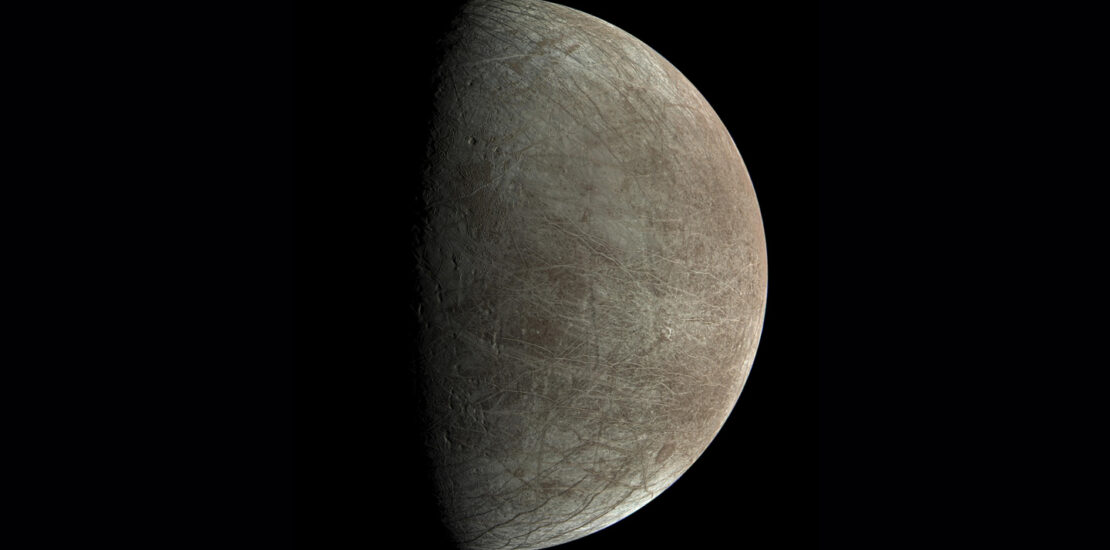
New discoveries in space can significantly impact our understanding of life beyond Earth. Recently, the potential for identifying water on Jupiter’s icy moon Europa has taken a hit, which could affect future missions aimed at finding extraterrestrial life.
The Disappearance of Water Plumes
For almost a decade, scientists used the Hubble Space Telescope to observe Europa, intrigued by the initial indications of water vapor plumes. In 2013, researchers reported excess ultraviolet light detected near Europa’s south pole, implying that cracks in the moon’s icy surface might occasionally release water from its hidden ocean into space. This announcement excited scientists because Europa is considered one of the best candidates in our solar system for harboring life.
However, a recent analysis has shown that no strong evidence of these vapor jets remains. Lorenz Roth, a planetary astronomer, stated, “They disappeared. I don’t think there’s any strong evidence left.” The vanishing plumes raise new questions about the search for life beneath Europa’s thick ice shell.
What Makes Europa So Special?
Europa is unique due to its ocean, which lies beneath a crust of ice several kilometers thick. This oceanic environment could host microorganisms, even if it remains difficult to study without invasive methods like drilling. The idea of using vapor plumes to sample the water without landing on the surface was a game-changer, offering a quick way to explore the moon’s potential for life.
Initially, Roth and his team anticipated seeing evidence of these plumes again during follow-up observations. To their surprise, subsequent attempts failed to reveal any signs of water vapor. As they continued to analyze data from Hubble, they used improved techniques to accurately identify Europa’s edges, knowing that even a slight misalignment could alter their results.
The Search Continues
Despite the disappointing findings, Roth cautions that there could still be smaller, undetected plumes present. He expressed hope for NASA’s upcoming Europa Clipper mission, scheduled to reach Jupiter in April 2030. The Clipper will be equipped with advanced instruments designed to investigate the moon more comprehensively. Roth remarked, “I’m excited for Europa Clipper having the possibility and the instruments to find smaller things.” While the new information is disheartening, the scientific community remains hopeful that future missions can unveil new secrets.
As we push forward into the cosmos, the meaning of these explorations is profound. Just as the discovery of life on Europa could answer significant questions about our universe, these findings push us to adapt and refine our search for extraterrestrial life.
What This Means for You
In the age of exploration, the consequences of scientific discoveries can feel very personal. If you ever need to review contracts or agreements about technology or space exploration, legal-document-to-plain-english-translator/”>AI legalese decoder can help translate them into plain English in seconds. Understanding the implications of scientific research can enhance how we engage with such projects in the future.
Need to decode legal language? Try the free AI Legalese Decoder — no registration required.
Source: https://www.sciencenews.org/article/europa-moon-no-water-plumes-space

 ****** just grabbed a