
Chelsea Celebrates Small Businesses with Good Riddance Event
- June 8, 2026
- Posted by: Alex Reed
- Category: Related News
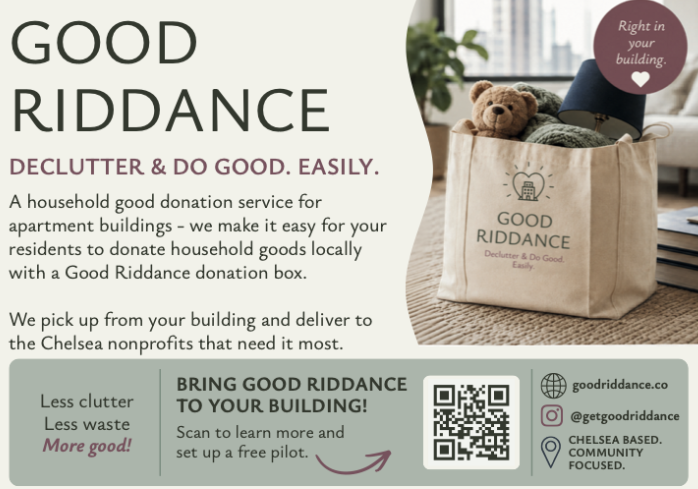
Good Riddance is not just a catchy name; it’s a smart solution for anyone overwhelmed by clutter. This new business helps people donate unwanted items easily, turning frustration into community support.
Turning Frustration into a Solution
Good Riddance began when founder Cortney Boston noticed how hard it was to responsibly donate food and other items in New York City. After her kitten, Monkey, refused his food, she ended up with unopened cans and no easy way to donate them. This inspired her to create a service that simplifies the donation process.
Launched this spring, Good Riddance collects items through subscription boxes placed in residential buildings. Residents can drop off things they no longer need, and the company sorts and delivers them to local nonprofits. The initiative not only helps individuals declutter but also fosters community reuse. Neighbors often swap items before they even reach donation organizations.
How Good Riddance Works
Good Riddance collects a variety of items: housewares, toys, clothing, and office supplies. However, the company doesn’t accept furniture or rugs. Their strategy focuses on ensuring that all donated items are in good enough condition to be repurposed. If an item is damaged beyond repair, it gets recycled or thrown away.
The nonprofit partners in Chelsea receive these items and redistribute them to those in need. This collaboration helps divert waste from landfills and supports community organizations. Good Riddance tracks every donation to measure how much waste they’ve diverted, with plans to use this data for efficiency improvements in buildings.
Engaging with the Community
Good Riddance aims to make a meaningful impact while keeping its costs low. They offer subscriptions at a price less than a cup of coffee per month per apartment, making it accessible for families. The concept works particularly well in apartment buildings, allowing managers and owners to add valuable amenities for their residents.
Currently, Good Riddance is starting to expand by partnering with more buildings, reflecting the growing interest in sustainable practices. The company encourages tenants, building managers, and owners to work together to make donating easier and more effective.
Building a Sustainable Future
Founded by two moms, Cortney and Anita, Good Riddance represents a response to the common chaos of city life. They understand that families are often inundated with items they no longer use, from children’s toys to old clothes. Their goal is clear: create a cleaner city by making it easier for New Yorkers to declutter and give unwanted items a second life.
By establishing Good Riddance, they hope to change how communities interact with surplus goods, making sustainability both practical and achievable for busy families.
What this means for you
If you’re feeling overwhelmed by clutter, consider exploring local donation programs like Good Riddance to help you easily give items a new home. If you ever need to review a subscription agreement, legal-document-to-plain-english-translator/”>AI legalese decoder can translate it into plain English in seconds. Supporting initiatives like this not only benefits you but also enriches your community.
Need to decode legal language? Try the free AI Legalese Decoder — no registration required.

 ****** just grabbed a