
A New Sky Survey Unveils Cosmic Wonders and Other Science News
- July 4, 2026
- Posted by: Alex Reed
- Category: Related News
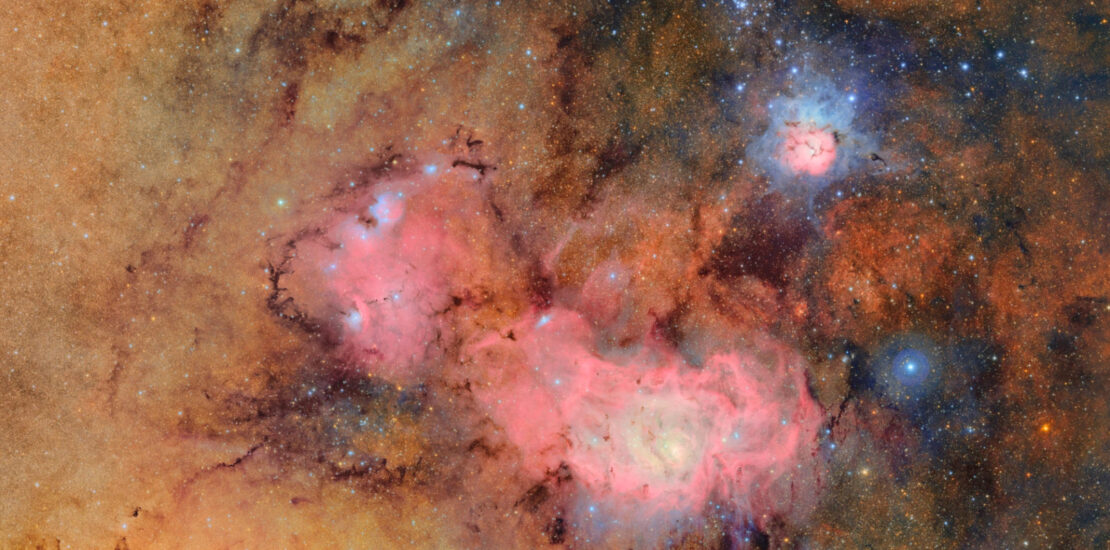
This week, a groundbreaking project called the Legacy Survey of Space and Time (LSST) kicked off at the Vera C. Rubin Observatory in Chile. This initiative has the potential to reshape our understanding of the universe, and what it finds could impact everything from scientific theories to advancements in technology—all of which can touch our daily lives.
The Rubin Observatory: A New Era in Sky Observation
The Vera C. Rubin Observatory boasts the largest digital camera in the world, with a staggering 3,200 megapixels. It officially started its 10-year survey of the universe on June 30. For the next decade, the observatory will take a new image every 40 seconds, providing a detailed look at the entire southern sky every few nights. This ambitious mission will create an “ultrawide, ultrahigh-definition time-lapse record of the universe,” according to a press release.
Brian Stone from the National Science Foundation described the endeavor as filming “the greatest cosmic movie ever made.” The observatory conducted its first test runs last summer, revealing millions of galaxies and stars, alongside thousands of previously unseen asteroids. During its decade-long survey, the LSST will revisit each spot in the sky approximately 800 times. This will allow scientists to document changes and cosmic events over time. Each night, the observatory will collect around 10 terabytes of data, which is equivalent to taking about a thousand images each night.
Unlocking Cosmic Mysteries
The observatory’s mission isn’t just about capturing beautiful images; it aims to unlock deeper secrets of the universe. Darío Gil, Under Secretary for Science at the U.S. Department of Energy, stated that understanding dark energy and dark matter could lead us to grasp the fundamental laws of existence. These concepts are crucial for explaining the universe’s behavior and could influence everything from climate science to technological innovations.
The LSST’s findings could also play a pivotal role in future explorations of other planets. As scientists analyze each image over the decade, they will gather invaluable data that could help improve our understanding of the cosmos.
Innovative Research in Unlikely Places
In a separate but equally fascinating scientific advancement, researchers from Nanyang Technological University Singapore and Waseda University have developed diving suits for cyborg cockroaches. This unusual project aims to use these modified insects for search and rescue tasks in environments inaccessible to larger robots or humans.
The diving suits allow cyborg cockroaches to swim underwater for up to three hours. Equipped with electronic controllers, these Madagascar hissing cockroaches can navigate flooded areas post-disasters, such as the recent earthquake in Myanmar. The flexible suits consist of an oxygen tank and silicone tubes that let the roaches breathe while they swim. This technology could revolutionize search and rescue operations, demonstrating how science can solve real-world problems, even in unexpected ways.
NASA’s Ambitious Lunar Plans
Meanwhile, NASA has made strides in its lunar exploration strategy. Earlier this year, the agency decided to pause the construction of an orbiting Lunar Gateway station in favor of a $20 billion Moon Base. As part of this new focus, NASA awarded nearly $600 million in contracts to three companies—Astrobotic, Firefly Aerospace, and Intuitive Machines—in preparation for payload deliveries to the Moon.
The early missions aim to gather scientific data that will pave the way for future lunar exploration. By flying the same science instruments on multiple landers, NASA hopes to collect critical environmental data that can ensure the safety of future human missions. Joel Kearns, a NASA official, mentioned that this approach is akin to having weather stations on Earth, highlighting the importance of robust data collection for safe exploration.
What this means for you
The research and advancements from these projects could impact our understanding of space, leading to new technologies and insights that resonate in many areas of life. For those of you who deal with technical agreements, if you ever need to review contracts like a service agreement, legal-document-to-plain-english-translator/”>AI legalese decoder can translate it into plain English in seconds.
Need to decode legal language? Try the free AI Legalese Decoder — no registration required.

 ****** just grabbed a