
Blood Marker for Alzheimer’s May Indicate More Serious Issues in Men
- June 30, 2026
- Posted by: Alex Reed
- Category: Related News
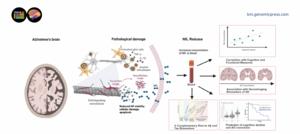
A new blood test could change how we understand neurodegenerative diseases like Alzheimer’s. A recent study highlights that this test not only identifies brain damage but may also interpret the results differently based on a person’s sex. This insight could impact early diagnosis and treatment, making it essential for everyone.
The Role of Neurofilament Light Chain
Neurofilament light chain (NfL) is a marker that can indicate brain injury. When nerve fibers in the brain sustain damage, NfL fragments escape into the bloodstream. Researchers at Fudan University and Wuhan University studied a decade’s worth of findings on this marker. They found that while NfL levels indicate damage across all sexes, the same NfL concentration could mean different things for men and women.
NfL is an important element because it provides an easy way to monitor how neurons are dying. Traditional methods can be invasive and costly. For example, techniques like spinal fluid analysis require a needle, and imaging tests like PET scans can be expensive. In contrast, a simple blood test can be repeated as often as needed. This allows healthcare providers to better track the progression of illnesses like Alzheimer’s over time.
Emerging Patterns in Neurodegeneration
The review suggests that elevated NfL levels may show up even before clear symptoms of conditions like Alzheimer’s begin. In families genetically predisposed to Alzheimer’s, scientists have noticed NfL levels rising years before symptoms manifest. This could allow for earlier interventions, potentially slowing down the disease’s progression.
The review pointed out that men and women might react differently to similar NfL readings. Recent studies indicate that men suffer more cognitive decline and brain changes compared to women for the same NfL levels. This becomes crucial when diagnosing and treating neurological disorders, indicating that a standard approach to interpreting these markers may not be sufficient anymore.
Considering Differences in Interpretation
Sex differences have often been overlooked in medical research, particularly in Alzheimer’s studies. While some research showed no difference between men and women, others suggested that different biological factors, such as hormones and immune responses, could influence how NfL is interpreted.
For instance, male brains may react differently to neuron injuries. Factors like testosterone, estrogen, or even the size of the brain can complicate how NfL levels correlate with brain health. The authors emphasize that understanding these nuances is crucial for accurate diagnosis and treatment. Ignoring sex-specific interpretations could lead to underestimating the severity of the disease in men, ultimately affecting treatment approaches.
Future Directions for Research
Despite these promising findings, the review also highlights some limitations. Current research on NfL and its relationship with sex is still in its early stages. The existing studies often yield conflicting results, making it challenging for healthcare providers to come to a consensus.
Moreover, the technology to measure NfL is not widely accessible, which can create disparities in diagnosing and treating Alzheimer’s. In order to improve upon these insights, further large-scale studies that factor in both age and sex are needed. The goal is to create guidelines that can cater to diverse populations, making the diagnosis and treatment options more equitable.
What this means for you
Understanding how neurofilament light chain levels can indicate brain health is important for everyone, especially as population aging rates increase. If you ever need to review medical consent documents or insurance forms, AI legalese decoder can translate it into plain English in seconds. Knowing how to read and interpret these documents can help you make informed health decisions.
Need to decode legal language? Try the free AI Legalese Decoder — no registration required.

 ****** just grabbed a