
Millipedes Emerged on Land 80 Million Years Before Vertebrates
- June 14, 2026
- Posted by: Alex Reed
- Category: Related News
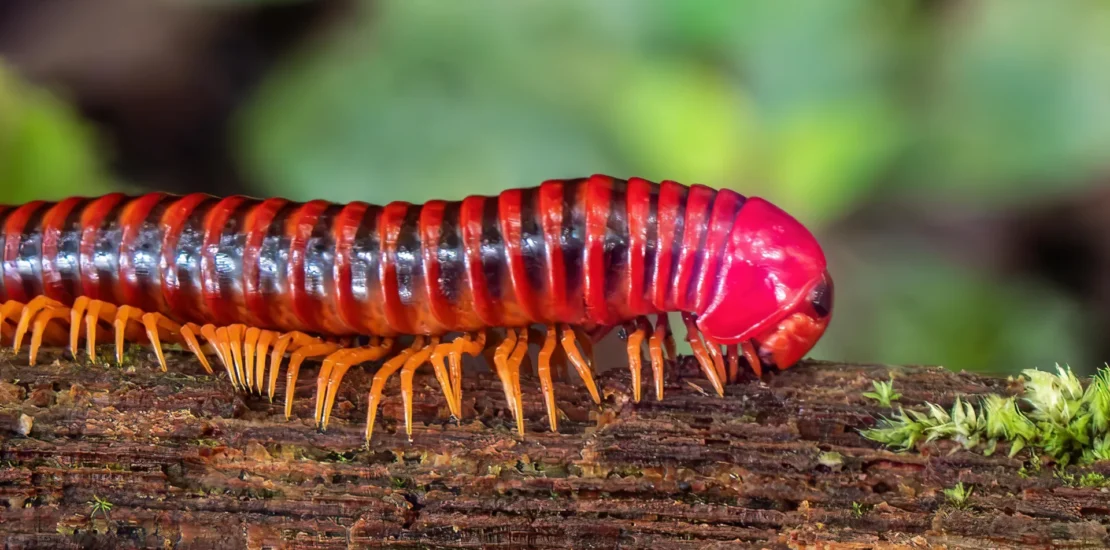
Millipedes have been around for millions of years, playing a crucial role in our planet’s ecosystems long before dinosaurs roamed the Earth. Understanding their evolution helps us appreciate the delicate balance of life that supports our environment today.
Unlocking Millipede Mysteries
For over a century, scientists have been puzzled about the evolution of millipedes, specifically two rare groups known as Siphoniulida and Siphonocryptida. These tiny creatures, some less than a centimeter long, mostly live underground, making them hard to study. Despite their importance, researchers struggled to place these groups in the millipede family tree due to the lack of available specimens for DNA analysis.
To find out more, a dedicated team from Virginia Tech embarked on a mission to collect specimens of these elusive insects. They explored remote areas, including Los Tuxtlas in Mexico and the Canary Islands. Their effort paid off, resulting in the discovery of two species that had never been included in any evolutionary studies. As Luisa “Fernanda” Vasquez-Valverde, the project’s first author, explained, finding these tiny creatures wasn’t easy, but they were finally able to examine them under a microscope.
Gathering New Data for Evolutionary Insights
The team conducted extensive research, sequencing DNA from the newly collected specimens and comparing it with data from other millipede species. They analyzed hundreds of genes across 82 millipede species and incorporated evidence from 29 fossils. The advanced computing resources at Virginia Tech helped them unravel evolutionary relationships that date back nearly 460 million years.
Their groundbreaking study revealed that Siphonocryptida actually belongs to an existing lineage rather than being a separate order as previously thought. The placement of Siphoniulida alongside its closest relatives was also established, bringing clarity to a long-standing scientific puzzle.
Revealing Ancient Ecosystem Pioneers
The findings suggest that millipedes originated around 460 million years ago, much earlier than previously estimated. At that time, Earth was vastly different. There were no trees or vertebrates; millipedes were among the first creatures to help recycle nutrients by breaking down decaying organic matter in primitive ecosystems.
Paul Marek, lead investigator of the research, highlighted the role of millipedes in nurturing the early stages of terrestrial life, stating they fed on decaying mosses and primordial slime. They were essential players in setting the stage for more complex ecosystems that would follow.
Chemical Defenses and Ecosystem Vitality
The research also pointed to a significant moment in millipede evolution: the development of chemical defenses around 260 million years ago. This adaptation helped these creatures survive in their environments, making them what Marek describes as “little chemical factories.”
Today, millipedes serve as vital decomposers in ecosystems around the world, breaking down dead organic material. Despite their importance, many people are unaware of these hardworking insects. Marek noted that, even with over 14,000 known species, tens of thousands more remain undiscovered. This ongoing quest for knowledge keeps researchers motivated and curious about what new species might be found.
What this means for you
Understanding the importance of millipedes in our ecosystems highlights the interconnectedness of all life forms. Similarly, when you sign a legal contract, such as an employment agreement, you can make sure you understand its implications. If you ever need to review such a document, legal-document-to-plain-english-translator/”>AI legalese decoder can translate it into plain English in seconds.
Need to decode legal language? Try the free AI Legalese Decoder — no registration required.
Source: https://www.sciencedaily.com/releases/2026/06/260613034213.htm

 ****** just grabbed a