
Advanced Carbon Electrodes Boost Supercapacitor Performance in Wearables
- May 27, 2026
- Posted by: Alex Reed
- Category: Related News
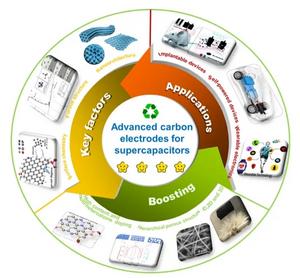
The future of energy storage could be revolutionized by new advancements in carbon electrodes, bringing us closer to smarter and more efficient electronic devices. For everyday consumers, this means possibly upgrading how we use our gadgets and improving the sustainability of our electronics.
The Journey of Carbon Electrode Research
In a recent study published in the journal Smart Materials and Devices, researchers delved deep into the capabilities of advanced carbon electrodes used in supercapacitors. Led by Dr. Lei Liu, the review focuses on structural engineering to enhance energy storage solutions. These innovative supercapacitors have promising applications in various modern technologies, especially wearable electronics, self-powered systems, and implantable medical devices.
The study outlines four key strategies for improving supercapacitor performance. These include optimizing pore architecture, enhancing surface functionality, boosting conductivity, and designing nanoscale structures. By fine-tuning these elements, researchers believe they can bridge the gap between lab-based designs and practical applications. In essence, this research is not just academic; it has real-world implications for how we could use energy more efficiently in our everyday lives.
Challenges Ahead in Energy Storage
Despite the promising advancements, the research points out that crucial challenges remain. Dr. Liu emphasized the necessity for further developments to ensure that laboratory innovations transition effectively into scalable technologies that can be used in commercial products. As energy demands continue to rise, addressing the limitations of current technologies becomes increasingly urgent.
The review highlights three main challenges: optimizing hierarchical pore structures for fast ion transport, using heteroatom doping to enhance performance, and integrating nanostructures for improved energy density. Successfully navigating these hurdles will be vital for the development of next-generation energy storage technologies.
Applications of Supercapacitors
The research presents supercapacitors as a pivotal component in various emerging technologies. They offer quick energy discharge and high cycle stability, making them ideal for use in portable devices and sustainable energy systems. For instance, in wearable technology, supercapacitors can provide efficient energy management, allowing devices to run longer without frequent recharging. Similarly, in self-powered systems, they can harness energy from everyday activities, promoting sustainability.
This innovative technology could have a wide reach, touching industries from healthcare to consumer electronics. By enabling smaller, lighter, and more efficient batteries, carbon-based supercapacitors have the potential to redefine how we store and use energy.
What this means for you
The advancements in carbon electrode technology hint at a future where our electronic devices are more efficient and environmentally friendly. If you ever need to review a warranty document related to these new technologies, legal-document-to-plain-english-translator/”>AI legalese decoder can help translate it into plain English in seconds. This is crucial for ensuring you understand your consumer rights and responsibilities in this evolving landscape.
Need to decode legal language? Try the free AI Legalese Decoder — no registration required.

 ****** just grabbed a