
Trump defends controversial math behind his drug price calculations
- April 23, 2026
- Posted by: Alex Reed
- Category: Related News
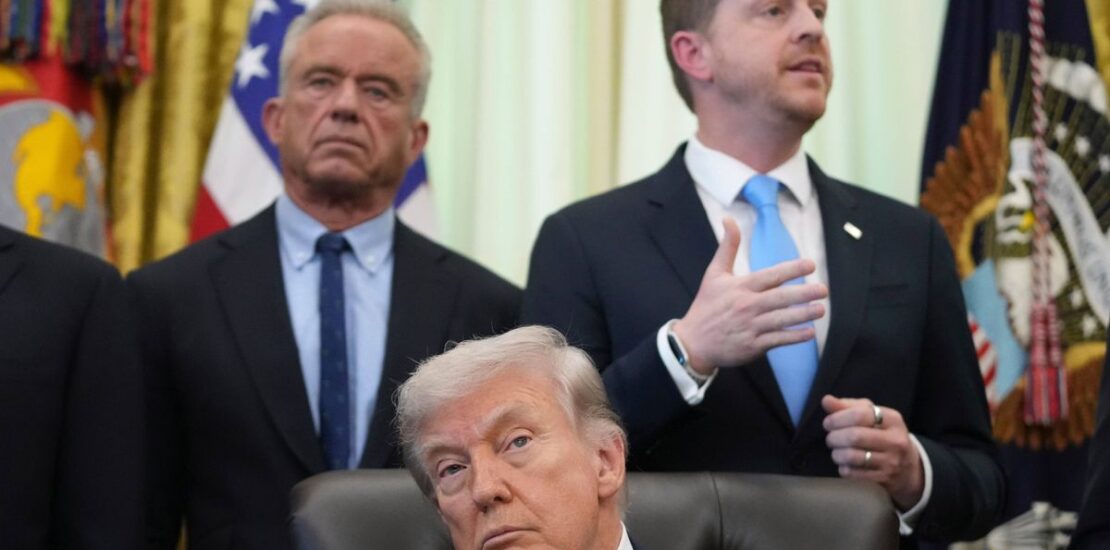
President Donald Trump has recently sparked conversations about the validity of numerical claims in politics, raising eyebrows with his statements on drug prices. This debate matters because understanding how information is presented can directly affect our wallets, especially when it comes to healthcare.
Trump’s Claims on Drug Prices
During a recent event, Trump announced a deal with the pharmaceutical company Regeneron aimed at reducing drug costs. He boasted that prices on prescription medications had been cut by figures exceeding 100%, a statement that is impossible in a mathematical context. Such exaggerated claims not only mislead the public but also have real implications on how drug pricing is perceived and understood.
Trump himself acknowledged that he has previously claimed reductions of “500%” and “600%.” However, he also suggested his team sometimes states decreases of “50%” or “60%,” which he described as “different calculations.” While he insists that these variations make sense, they create confusion. The reality is, price reductions cannot mathematically exceed 100% without producing a zero-cost scenario—an unlikely circumstance for consumers.
Understanding ‘Fake Math’
What Trump refers to as “alternative calculations” has significant impacts. To illustrate, if a drug originally costs $100 and is then priced at $600, that’s a 600% increase. For a price decrease to be accurately represented in percentages, it can’t exceed the original value. This means that when Trump claims severe cuts, he distorts the reality of the pricing structure.
In a follow-up discussion, Robert F. Kennedy Jr. reinforced this point during the same event, mentioning that if drug companies hike prices by over 100%, then any reductions must be looked at seriously to make any sense. This rhetoric about high price increases followed by exaggerated reductions raises crucial questions about integrity in political statements.
A Trend in Miscommunication
This isn’t the first time Trump has faced scrutiny over his numerical claims. At the same event, he also discussed the duration of the ongoing military conflict with Iran. He had previously estimated a timeline of four to six weeks but later stated that the situation aligned with his original prediction. However, the war has lasted well beyond that timeline, highlighting inconsistencies in his statements about facts.
Additionally, Trump brought up past controversies, including his crowd size during his inauguration. He claimed an attendance that rivals a major historical event, like Martin Luther King Jr.’s famous “I Have a Dream” speech. Such references indicate a pattern where subjective interpretations of the facts overshadow actual data.
The Challenge of Parsing Claims
Understanding political statements, especially those involving numbers, is more important than ever. How price reductions and other statistics are framed can shape public opinion and policy decisions. This is particularly relevant in healthcare, as policy adjustments based on misleading information can directly affect consumer costs.
The critical takeaway here is that while politicians may use broad and exaggerated figures, the truth remains grounded in mathematical laws. Scrutiny and fact-checking are essential for holding public figures accountable. It encourages citizens to seek clarity and precision in promises made by their leaders.
What this means for you
This story underlines the importance of being vigilant about numerical claims made by public figures, especially in areas like healthcare. Misrepresentations can lead to misunderstandings that might affect you financially. If you ever need to review the fine print related to your healthcare options, legal-document-to-plain-english-translator/”>AI legalese decoder can decode it into plain English in seconds.
Need to decode legal language? Try the free AI Legalese Decoder — no registration required.

 ****** just grabbed a