
Escondido Small Businesses Struggle Amid Grand Avenue Redevelopment
- July 6, 2026
- Posted by: Alex Reed
- Category: Related News
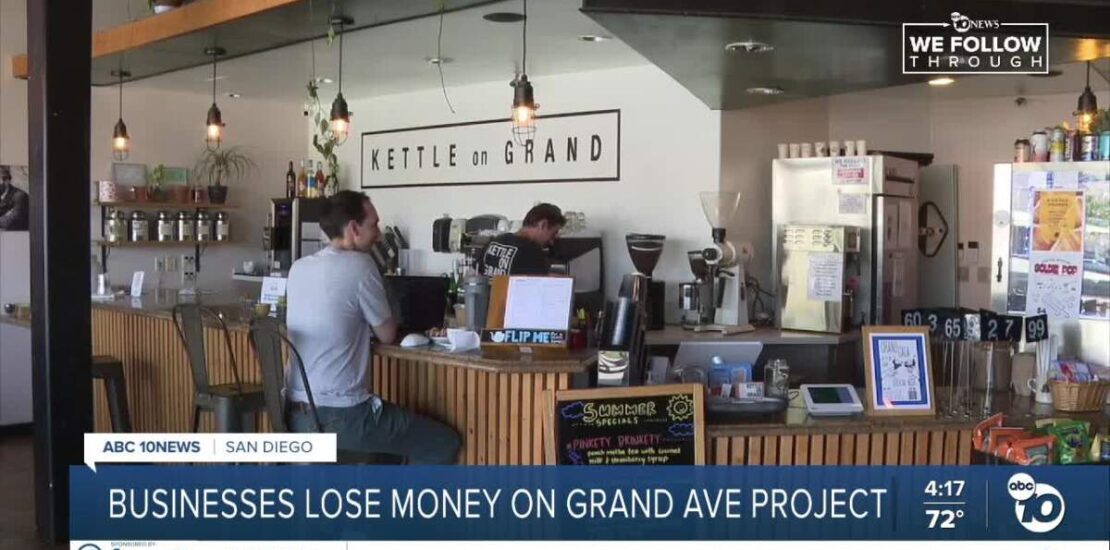
In downtown Escondido, a $15 million redevelopment project is designed to uplift the area, but it’s also creating financial hardships for local small businesses. As construction began, some business owners found themselves facing unexpected losses, highlighting the need for better communication between the city and its entrepreneurs.
Impact of Construction on Local Businesses
Givino Rossini, owner of a small café called Kettle on Grand, experienced significant financial stress when construction commenced in June 2025. He claims he received only a week’s notice, which left him scrambling to adjust. The limited warning forced him to face the realities of a struggling business, resulting in a loss exceeding $100,000—an incredible burden for any new entrepreneur.
To survive, Rossini had to take on debt. “I had to take on some additional loans and borrow some money to survive and get through that phase,” he explained. His experience is not unique; other small business owners are voicing similar concerns about the financial toll of the project.
The city’s $15 million redevelopment aims to enhance local conditions with improved sidewalks, better parking options, and outdoor dining spaces. But while city officials advocate for the long-term benefits of these changes, the immediate challenges faced by business owners like Rossini raise questions about the decision-making process.
City Officials’ Stance
When approached by news outlets, Escondido Mayor Dane White acknowledged that the city could have done better in terms of communication with affected business owners. “There is no doubt the city did some things, or didn’t take enough into consideration that it should have,” he admitted.
Despite the awareness of shortcomings, the mayor indicated that no additional grant funds are available to assist struggling businesses. His hope is that the eventual transformation of downtown Escondido will attract visitors from across the county, benefiting local businesses in the long run. “This redevelopment is about making our downtown an exciting place for people to come,” White stated.
While the city’s vision of revitalizing downtown may hold promise, the lack of support for businesses during a transitional phase has led many to feel abandoned.
Voices from the Business Community
Local business owners are advocating for the city to take more responsibility for the fallout of such projects. They argue that better outreach is essential to understand and mitigate the financial risks involved in redevelopment.
Rossini suggested that city officials should have reached out to stakeholders beforehand, gathering input on potential revenue losses. “It would have made a difference if the city had engaged with us more,” he noted. The general sentiment is that while improvements are welcomed, proper planning and communication could prevent such losses for small businesses in the future.
As the Grand Avenue Redevelopment Project progresses, it’s clear that communication is a crucial component. The city must take the proactive step of engaging with business owners to ensure they are informed about plans that directly affect their livelihoods.
What this means for you
This situation underscores the importance of clear communication during large projects that can impact local businesses. If you ever need to review documents related to business contracts or agreements arising from such projects, legal-document-to-plain-english-translator/”>AI legalese decoder can translate it into plain English in seconds. Be aware of your rights and ensure you are informed to navigate changes in your community with confidence.
Need to decode legal language? Try the free AI Legalese Decoder — no registration required.

 ****** just grabbed a