
Big Brands Embrace Robotics While Reassessing AI Strategies
- July 5, 2026
- Posted by: Alex Reed
- Category: Related News
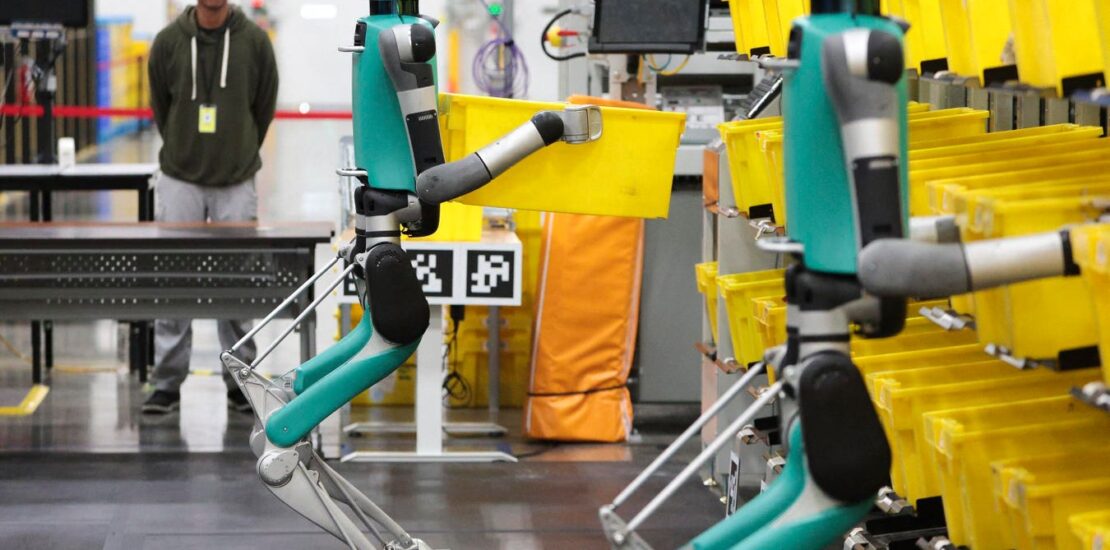
General Motors is making waves in the automotive industry, but not all the attention is positive. The recent decision to replace over 1,000 factory workers with robots is raising questions about the future of human labor in manufacturing. As AI and robotics become common in workplaces, this story underscores a growing concern for many regular people: What does this mean for jobs and the economy?
GM’s Robotic Transformation
General Motors, also known as GM, recently faced scrutiny after replacing more than 1,000 workers at its Factory Zero with over 50 collaborative robots, or “cobots.” This move is part of a broader strategy to shift towards a workforce that can work alongside artificial intelligence and robotics. However, the decision to lay off so many employees has understandably sparked protests among union members, who worry about their job security. GM claims that this transformation reflects a focus on innovation and a necessary evolution in their manufacturing processes.
While many corporations view robotics as a solution to improve efficiency, this has led to growing tensions in workplaces where employees feel threatened. As technology continues to advance, labor markets are shifting, leading to fears that many may be left behind.
The Pivotal Role of AI in Employment
Recent trends show that companies embracing AI are starting to rethink their approach. Employers who previously cut jobs due to automation are now facing regret. Many are realizing that replacing human workers entirely has not always provided the benefits they expected. A study tracked over 21,000 organizations and found that those integrating AI while maintaining a human workforce saw a 10% increase in hiring.
One major player, Ford, learned that AI could not consistently replace experienced engineers. After relying heavily on AI for design tasks, the company experienced costly mistakes that required expert rectification. This shift away from over-reliance on technology reveals a critical lesson: successful integration of AI requires a balance of human talent and technology.
AI Adoption in Other Sectors
In a different corner of the business world, Santander Bank is making strides in AI adoption. They plan to extend AI tools to 185,000 employees worldwide, a significant move for the financial sector. This expansion aims to enhance productivity and customer service, not to replace existing staff. Santander’s focus is on making AI a core part of their operations, rather than a standalone solution. This approach exemplifies how businesses can utilize technology to bolster their workforce instead of displacing it.
Meanwhile, Pie, an AI startup, has recently secured $23.7 million in funding to help small businesses enhance their customer acquisition strategies through AI. Their services focus on AI-powered tools for visibility in various channels such as Google Maps and Yelp, aiming to empower small business owners who may not have the resources to compete with larger corporations.
Understanding the Broader Impact
The integration of AI and robotics into industries isn’t just a trend; it’s rapidly becoming standard practice. However, the journey is not without challenges, especially for small businesses. Many smaller companies struggle to keep pace with rapid technological advancements and the associated costs. While larger companies like GM and Santander set the stage, it’s essential for small businesses to use technology wisely and strategically.
For instance, employing AI in targeted areas—like customer support or data management—can show clear benefits without overwhelming current staff. It’s crucial for smaller organizations to consider their specific needs and evaluate the return on investment before fully diving into AI technology.
What this means for you
As AI transforms workplaces, it’s essential to stay informed about how these changes might affect your job or industry. If you ever need to review employment contracts or other documents related to workplace changes, legal-document-to-plain-english-translator/”>AI legalese decoder can decode the fine print into plain English. Remember, understanding your rights and options is just as important as keeping up with technology.
Need to decode legal language? Try the free AI Legalese Decoder — no registration required.

 ****** just grabbed a