
Trump’s Address and Fireworks Celebrate Resilience at National Mall
- July 4, 2026
- Posted by: Alex Reed
- Category: Related News
President Trump recently delivered a dramatic speech to commemorate America’s 250th anniversary of independence. His comments, filled with patriotic rhetoric and political bravado, highlight how celebrations can intertwine with current national issues, resonating with everyday Americans who feel the impact of political discourse in their lives.
Reviving Historical Narratives
During his address at the National Mall, Trump emphasized the storied history of the United States, referring to its founding fathers and the Constitution. He displayed several antique U.S. flags, including one alleged to have draped over Abraham Lincoln’s coffin. These historical symbols aimed to evoke national pride, tapping into the collective memory of American resilience.
"This American Republic has stood as the crowning achievement of human history," Trump stated. He suggested that the present time is the best America has ever achieved, a sentiment designed to inspire and galvanize his supporters.
Trump’s speech took place after storms briefly threatened the event, delaying and evicting attendees. Despite the weather challenges, he expressed determination to continue the celebrations, symbolizing perseverance amidst adversity.
Political Undertones
Amidst the celebration, Trump did not hesitate to address contentious political themes. He referred to his military actions in Iran, asserting that the U.S. sank its entire navy. This bold claim not only aimed to showcase strength but also sought to shift attention away from other pressing national issues.
In a move that raised eyebrows, he also warned against the threat of communism, likening it to a cancer that must be excised. This anti-communist rhetoric reflects a sharp and divisive approach that has characterized much of his presidency. Trump’s push for voting reforms, including stricter ID requirements and limited mail-in ballots, aligns with these sentiments, emphasizing his focus on national security and integrity.
Fireworks and Festivities
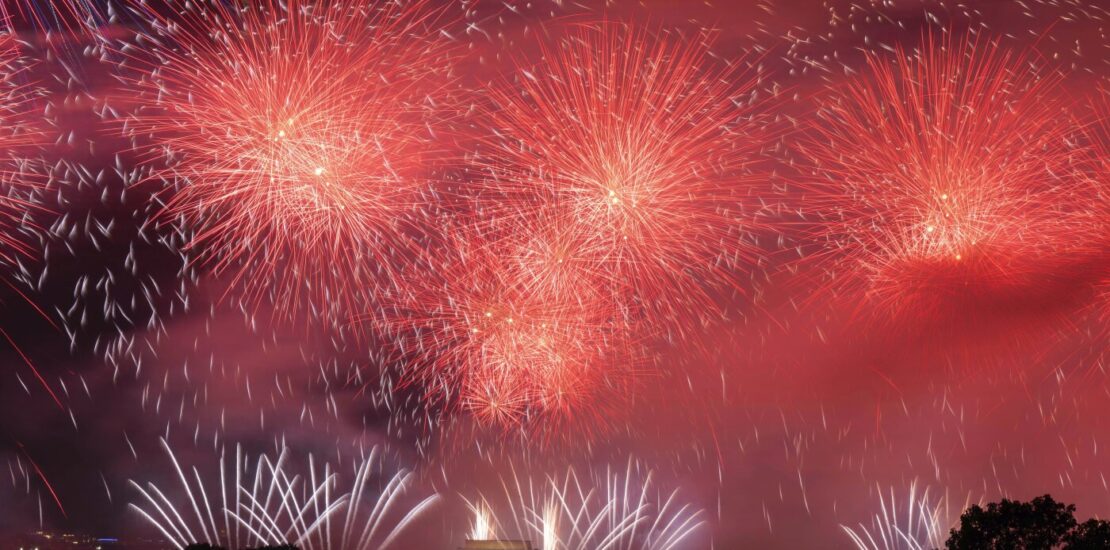
Following his address, a massive fireworks display lit up the night sky, which Trump claimed to be the largest in U.S. history. This grand finale elevated the celebratory atmosphere, with music like his campaign song "YMCA" playing in the backdrop as thousands filled the Mall to enjoy the show.
Despite earlier evictions due to storms, attendees remained in high spirits. Many expressed excitement, with some residents showcasing resilience even in the face of oppressive heat warnings across the D.C. area. It’s a testament to how collective experiences during national celebrations can unify people, regardless of their political affiliations.
Independence Day Challenges
The event was not without its trouble, as significant weather disruptions led to cancellations of other planned festivities, including the Independence Day Parade in D.C. Many had traveled far, particularly marching bands and families, only to find the celebrations curtailed.
Other cities, including Philadelphia and various locations in Virginia and New Jersey, also faced similar challenges, with heat and storms impacting their own Independence Day celebrations. Such factors underline the unpredictability of planning large public events, especially during the peak summer months.
What this means for you
The intertwining of political rhetoric and national celebrations can shape how ordinary Americans perceive events like Independence Day, reflecting broader societal debates. If you ever need to review voting reform documents or any other official papers, legal-document-to-plain-english-translator/”>AI legalese decoder can help translate them into plain English in seconds.
Need to decode legal language? Try the free AI Legalese Decoder — no registration required.
Source: https://www.npr.org/2026/07/04/nx-s1-5882179/washingtons-july-4-heat-cancellations

 ****** just grabbed a