
NASA’s Urgent Efforts to Prevent Swift Telescope’s Earth Return
- June 29, 2026
- Posted by: Alex Reed
- Category: Related News
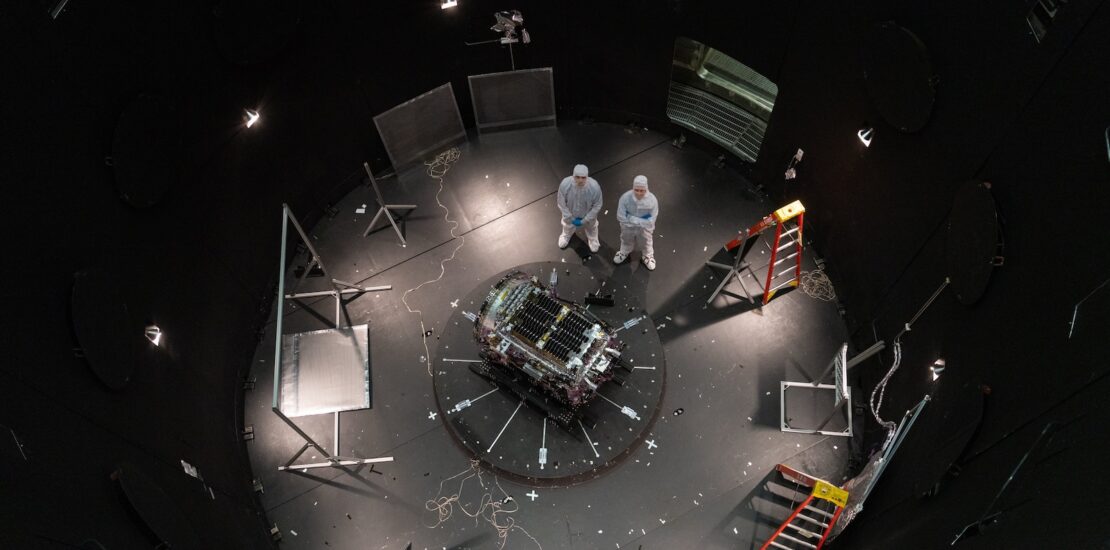
NASA is on the brink of a remarkable mission that could save an aging telescope from crashing back to Earth. This situation is not just about space; it highlights the importance of technology and innovation in preserving valuable resources we rely on to understand the universe.
What is at Stake for NASA?
The $30 million mission aims to rescue the Swift Observatory, which has been scanning the cosmos since 2004. Recent solar activity has caused its orbit to deteriorate, putting it at risk of falling. Swift has played a crucial role in observing cosmic events, from gamma-ray bursts to exploding stars. If it falls to Earth, we would lose a major tool for astronomical research.
To make this rescue possible, NASA has partnered with a startup called Katalyst Space Technologies. A specially designed robotic spacecraft, named Link, will attempt to boost Swift into a more stable orbit. This mission is groundbreaking because it’s the first time an American robotic spacecraft will be sent to rescue another satellite—something only China has successfully done before.
The Technical Challenge Ahead
Link has a unique design featuring three arms with grippers that resemble Lego hands. This robot will chase after Swift, which is currently orbiting about 224 miles above Earth. The goal is to raise Swift’s orbit to approximately 373 miles, a height that will allow it to continue gathering scientific data. However, time is of the essence; Swift is expected to reach a point of no return by October.
NASA has been proactive in slowing down Swift’s descent by turning off its scientific instruments, halting observations since February. While no one can guarantee the mission’s success, NASA believes that the potential loss of such an important telescope is worth the risk.
Revolutionizing Space Missions
Katalyst’s mission goes beyond just saving Swift; it marks a pivotal moment in how we can repair and maintain satellites in space. Current plans suggest that their next-generation robot will be capable of servicing satellites even higher in orbit, up to 22,300 miles. This opens the door to a future where multiple robots could not only fix satellites but also refuel them and even construct new orbital systems like solar farms.
NASA’s science mission chief has noted the importance of Swift, stating that if the telescope were to fail, it would result in a significant loss of valuable observational capabilities. The advancements in space technology could change how future missions are planned and executed, making repairs and maintenance much more feasible.
The Broader Impact on Science
Swift is often referred to as NASA’s “first responder,” designed to rapidly pivot and observe late-breaking astronomical events. As more advanced telescopes come online, such as the Webb Space Telescope and the upcoming Roman Space Telescope, the potential discoveries will only increase. Saving Swift could mean that it will be busier than ever, aiding in our understanding of the universe.
From a broader perspective, missions like these highlight our increasing responsibilities toward technology and the environment. While we cannot save everything in space, preserving unique instruments like Swift can have lasting implications for science and humanity’s quest for knowledge.
What this means for you
For regular people, this mission emphasizes the vital role that technology plays in our everyday lives, especially in scientific understanding. If you ever need to review a technical document, such as warranties or agreements related to technology, legal-document-to-plain-english-translator/”>AI legalese decoder can translate it into plain English in seconds. Understanding complex documents is important as we embrace technological advancements in various fields.
Need to decode legal language? Try the free AI Legalese Decoder — no registration required.

 ****** just grabbed a