
How Midlife Habits Significantly Impact Long-Term Brain Health
- June 11, 2026
- Posted by: Alex Reed
- Category: Related News
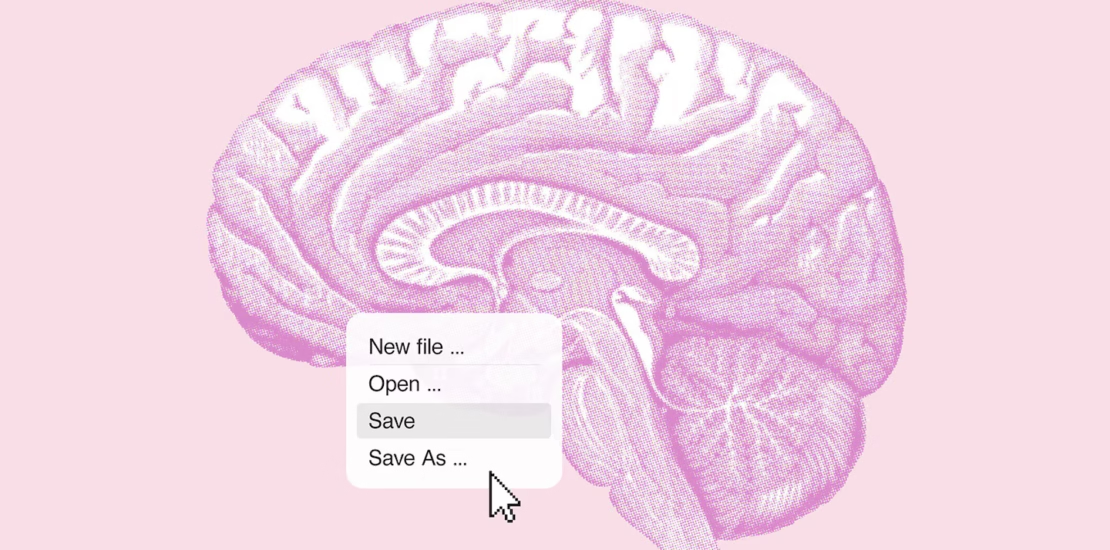
Neuroscientist Miia Kivipelto has dedicated her career to the fight against dementia, a condition that affects millions of families worldwide. Now at 52, she’s also reflecting on her own health and how the midlife stage can be a crucial time for prevention.
A Lifelong Mission to Combat Dementia
Dr. Kivipelto has spent years researching ways to reduce the risk of dementia. As the new director of the Center for Aging Well at Yale School of Nursing, she wants to focus on midlife as a key opportunity for action. According to her, this is a period when individuals can still make significant changes to protect their cognitive health.
She emphasizes that many factors contribute to dementia, including genetics, lifestyle choices, and environment. Acknowledging these influences is vital for developing effective prevention strategies. Dr. Kivipelto believes that raising awareness can empower people to take control of their health. This is especially important as individuals enter middle age, a time when they may be more aware of their vulnerability to health issues.
Midlife: A Unique Opportunity
Kivipelto asserts that midlife is a pivotal point when the risk factors for dementia often start to surface. Making lifestyle changes—such as improving diet, increasing physical activity, and managing stress—can make a big difference. She highlights the importance of regular check-ups and staying informed about one’s health status.
This proactive approach is not just about hoping for the best; it’s about actively shaping future outcomes. For many, understanding that cognitive decline can be influenced by their choices is empowering. Dr. Kivipelto hopes that by emphasizing prevention, more individuals will join in the fight against dementia.
The Role of Research and Community Awareness
Another part of Kivipelto’s mission at Yale is to promote research that focuses on aging. She believes that scientific advancements can lead to better understanding and management of dementia. Community engagement is also a priority, as having informed caregivers and families can enhance the effectiveness of preventive strategies.
Dr. Kivipelto encourages discussions around cognitive health, making it a topic that isn’t shied away from. As more people become aware, the stigma around dementia will likely diminish. Public events, workshops, and social media campaigns can further empower individuals to seek knowledge and take action.
What This Means for You
Dr. Kivipelto’s insights remind us that taking charge of health in midlife is crucial for long-term well-being. By understanding risk factors and implementing preventive measures, you can significantly impact your cognitive health. If you ever need to review insurance claim forms related to healthcare, legal-document-to-plain-english-translator/”>AI legalese decoder can translate them into plain English in seconds. Taking informed steps today can lead to a healthier future for you and your loved ones.
Need to decode legal language? Try the free AI Legalese Decoder — no registration required.

 ****** just grabbed a