
Small Business Optimism Dips in May, Reaching 95.3 Index Level
- June 10, 2026
- Posted by: Alex Reed
- Category: Related News
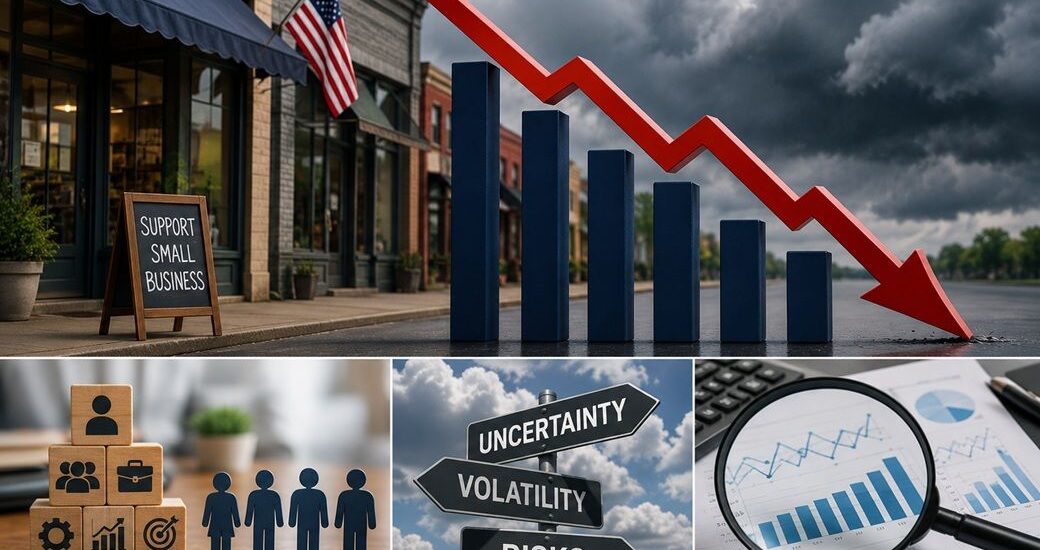
The recent decline in small business optimism signals potential challenges ahead for everyday consumers. As these businesses navigate economic uncertainty, decisions they make can directly impact prices and job availability in your community.
Understanding the Numbers
In May, the National Federation of Independent Business (NFIB) reported a 0.6-point drop in its small business optimism index, now sitting at 95.3. This figure is below the historical average of 98, highlighting ongoing economic challenges. Even more concerning is the rising uncertainty index, which jumped three points to 91, significantly above the historical average of 68.
These numbers indicate that small business owners are feeling increasingly uneasy about the future. With surging inflation rates and fluctuating fuel prices, the environment remains unpredictable. This instability can lead to higher costs for consumers and restricted job growth.
Job Market Dynamics
The NFIB employment index also shows troubling trends, registering a mere 100.3 in May, a slight drop from 100.4 in April. This marks the third month of decline in a row. Despite this, the index remains slightly above the historical average of 100.
Interestingly, approximately 29% of small business owners reported job openings they couldn’t fill, a decrease of 5 points from April. This reflects the lowest level of unfilled positions since May 2020. At the same time, just 9% of these owners plan to create new jobs in the upcoming three months—down from April and also the lowest since May 2020. This cautious approach to hiring could hint at a broader hesitation in economic optimism and consumer spending.
Business Owner Concerns
Despite the growing excitement about artificial intelligence (AI) investment, other pressing issues remain for small business owners. In May, 13% cited labor quality as their top concern, but this figure is at its lowest since December 2016. Conversely, those identifying labor costs as their most critical issue rose to 14%, the highest in survey history.
Additionally, reports of supply chain disruptions are on the rise, with 70% of small business owners acknowledging mild to moderate effects on their operations. These disruptions could lead to more significant challenges if businesses struggle to source necessary materials or products. As a result, reports of price increases among these businesses have surged, with a net of 36% raising average selling prices—the highest since March 2023.
Inflation’s Impact
With inflation continuing to climb, 18% of business owners now see it as their single biggest challenge, a two-point increase from April and the highest since December 2024. This rising concern about inflation is notable; it ranks as the second-most critical problem facing small business owners right now.
The implications of these economic indicators extend far beyond the world of business. Consumers may soon feel the impact as companies adjust their pricing structures to cope with rising costs.
What this means for you
For everyday consumers, the trends in small business optimism and inflation suggest that you might see higher prices for goods and services in the near future. Additionally, job opportunities may remain limited as businesses become more cautious. If you ever need to review a document related to your employment or a transaction, legal-document-to-plain-english-translator/”>AI legalese decoder can help decode the fine print into plain English in seconds.
Need to decode legal language? Try the free AI Legalese Decoder — no registration required.

 ****** just grabbed a