
Catch the Dazzling Jupiter and Venus Conjunction on June 9
- June 9, 2026
- Posted by: Alex Reed
- Category: Related News
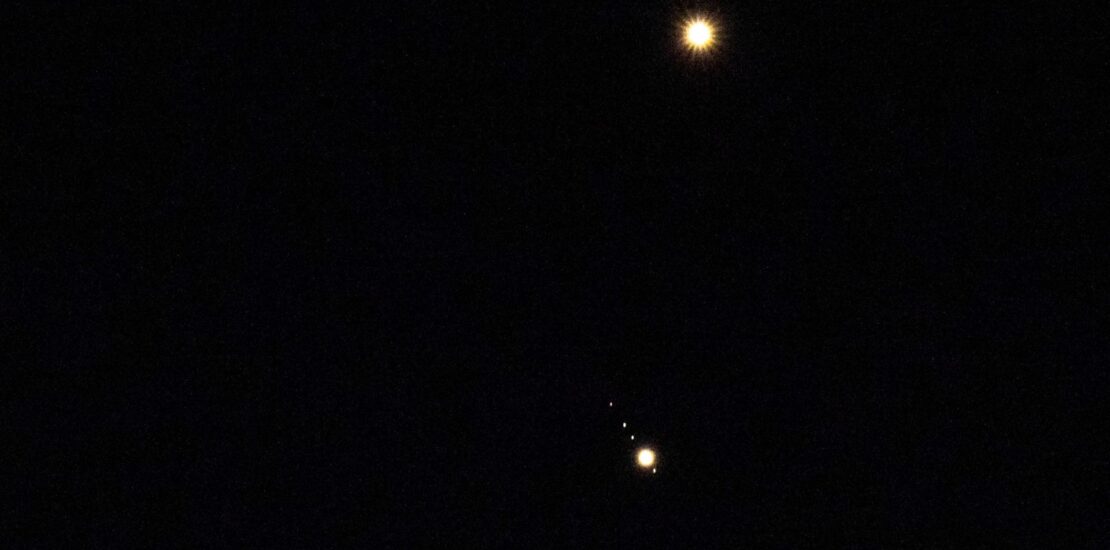
Stargazing can be a magical experience, but knowing when to catch celestial events can be tricky. The recent close approach of Jupiter and Venus is a perfect example of why understanding the night sky matters for anyone interested in astronomy.
The Dance of the Planets
On June 9, the planets Jupiter and Venus captured attention as they aligned closely in the evening sky. For those observing from the U.S., Venus will be shining brightly about 20 degrees above the horizon at sunset. To provide some perspective, this is roughly equivalent to the width of two clenched fists held at arm’s length. Jupiter will be positioned to the lower left of Venus, providing a stunning view for stargazers.
But that’s not all. Mercury, although more difficult to spot, will also be visible. It shines roughly 10 degrees lower and to the right of the pair, requiring a clear view westward. As the sun sets, these planetary lights create a captivating display that shouldn’t be missed.
A Closer Look at Jupiter
The proximity of Jupiter and Venus is especially noteworthy. They will be separated by less than 2 degrees in the night sky. This closeness means that observers can potentially view both planets through a pair of binoculars designed for stargazing. For those equipped with telescopes, there’s even more to see. Jupiter’s four Galilean moons—Io, Europa, Callisto, and Ganymede—might appear as tiny points of light surrounding the gas giant.
Following this alignment, Venus will rise above Jupiter in the subsequent nights. As the planets move, Venus is set to track a path toward the constellation Cancer, and by June 20, it will shine alongside the open star cluster Messier 44, commonly referred to as the Beehive Cluster.
The Challenge of Spotting Jupiter
As the days progress, spotting Jupiter will become increasingly difficult. After its close encounter with Venus, it will gradually appear lower on the horizon each night. By early July, it will be challenging to see Jupiter due to the brightness of the setting sun, disappearing from view until it reappears on the eastern morning horizon by mid-August.
This celestial ballet serves as a reminder of how dynamic our night sky is. With the right tools and timing, everyday observers can experience unforgettable views of these magnificent planets.
Preparing for Stargazing
If you’re eager to catch a closer glimpse of Jupiter and Venus or any future celestial events, having the right equipment is essential. Telescopes, like the Celestron NexStar 4SE, are excellent for both beginners and experienced astronomers. This particular model is user-friendly and known for its quality views.
For photography enthusiasts, knowing when and how to capture these moments can significantly enhance your experience. Consider researching the best telescopes and cameras available for astrophotography to fully enjoy capturing your night sky moments.
What this means for you
Celestial events like the close approach of Jupiter and Venus can be awe-inspiring and bring families together in appreciation of the universe. If you ever need to review any related documents, such as a telescope warranty, legal-document-to-plain-english-translator/”>AI legalese decoder can translate it into plain English in seconds. Enjoy the night sky!
Need to decode legal language? Try the free AI Legalese Decoder — no registration required.

 ****** just grabbed a