
Asian Markets Decline Following Wall Street’s Tech Sell-Off
- June 7, 2026
- Posted by: Alex Reed
- Category: Related News
Asian markets are feeling the heat, as concerns about major tech investments and rising interest rates lead to significant losses. For everyday people, this fluctuation impacts everything from job security to the cost of living.
Current Market Impact
After a challenging Monday, Japan’s Nikkei 225 index dropped 4.5%, settling at 63,604.15. This downturn comes on the heels of the Japanese government revising its expected economic growth rate for the first quarter to 1.8%, down from an earlier estimate of 2.1%. Even with this slide, it’s important to note that the Nikkei continues to trade at double the level it was five years ago, showcasing long-term resilience despite short-term volatility.
The worries stem not just from Japan but also from global tensions. Recently, rising oil prices shocked markets after Israel’s airstrikes targeted Iran. The latest unrest has unsettled traders, causing a ripple effect throughout Asia. As oil costs soar—Brent crude increasing to $97.64 a barrel—businesses and consumers alike brace for the added financial strain.
Regional Insights
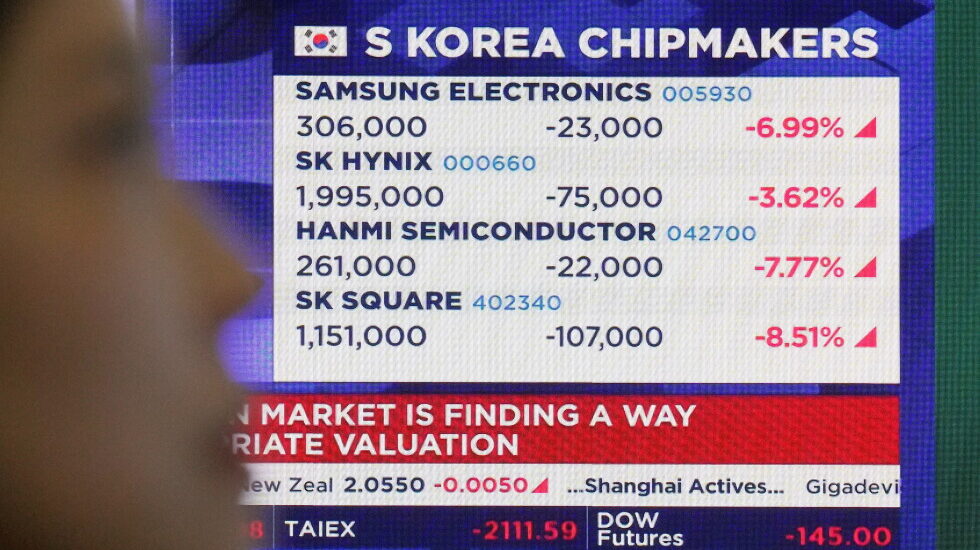
South Korean markets also faced a downturn, with the Kospi index diving 8.2% to 7,493.34. A notable factor in this decline was Samsung Electronics, which accounts for a substantial portion of South Korea’s market, falling by 9.7%. Similarly, SK Hynix saw a 7% decrease, contributing to the overall downward trend across the region.
Taiwan’s Taiex index slipped by 3.5%, and Hong Kong’s Hang Seng fell by 1.7%, closing at 24,527.22. China’s Shanghai Composite dropped 1.8%, landing at 3,955.72. With trading halted in Australia for a national holiday, investors across Asia were left grappling with unsettling news.
Understanding the Bigger Picture
One critical factor pushing these declines is the recent U.S. labor report showing that 172,000 jobs were added in May. This surprising growth fueled expectations that the Federal Reserve will inevitably raise interest rates, which could further tighten financial markets. The Fed’s ongoing strategy to hold rates steady in this climate underscores the complexities of an economy attempting to manage inflation while dealing with international crises.
As Ipek Ozkardeskaya, a senior analyst, pointed out, the “strength and size of the rally over the past months” require a reality check. This adjustment may lead to a deeper correction in the market, potentially returning valuations to healthier levels.
Implications for the Global Economy
With bond yields rising—indicative of increased caution among investors—the current climate becomes even more uncertain. The yield on the 10-year Treasury jumped from 4.50% to 4.54%. This upward trend reflects growing concern over inflation as consumers and businesses face higher prices, compounded by geopolitical tensions that disrupt global oil supplies.
In currency markets, the U.S. dollar gained slightly against the Japanese yen, inching up to 160.27, while the euro rose to $1.1522. These movements are crucial to watch, as they impact consumer purchasing power and international trade.
What this means for you
The recent market turbulence serves as a reminder of how quickly things can change economically. Regular people may need to prepare for fluctuations in job security and consumer prices. If you ever need to review employment contracts, AI legalese decoder can translate them into plain English in seconds. Stay informed and proactive to better navigate these uncertain times.
Need to decode legal language? Try the free AI Legalese Decoder — no registration required.
Source: https://apnews.com/article/stock-markets-rates-iran-economy-a4b9336d67a15d19d9aa5394e5a30be6

 ****** just grabbed a