
Global Shares Decline as Bond Yields Rise Amid Inflation Concerns
- May 15, 2026
- Posted by: Alex Reed
- Category: Related News
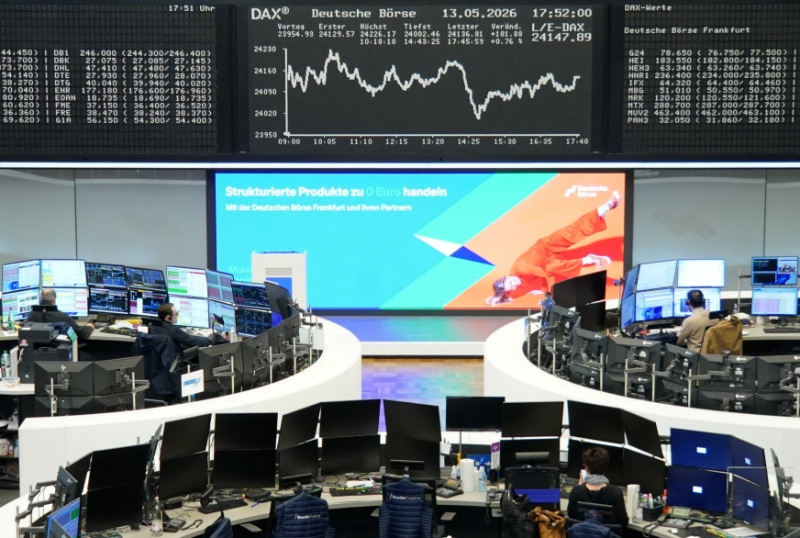
Global stock markets have recently experienced a sharp downturn, which might feel unsettling to everyday people. When stock prices drop, it can affect everything from retirement savings to job security. Understanding the reasons behind these fluctuations is key for anyone invested in the economy.
Market Reaction to Inflation Fears
On a particularly tumultuous day, major global equity indexes fell significantly, and U.S. bond yields soared. This market shakeup can be traced back to concerns about inflation that have been brewing in the economy. Investors, who were previously riding high on the enthusiasm for tech stocks, are now rethinking their positions.
Recent reports showed that inflation remains persistent, forcing traders to bet on potential interest rate hikes from the Federal Reserve this year. Kenny Polcari, a chief market strategist, noted that the market had become overly optimistic, focusing more on recent gains in artificial intelligence-related technology than on the underlying economic indicators.
As a result, the S&P 500 and Nasdaq saw substantial sell-offs after reaching record highs just days before. This turn of events emphasizes that the financial markets have a way of correcting themselves when they stray too far from economic fundamentals.
Stock Market Dive on Wall Street
On Wall Street, the effects of this market correction were immediate and pronounced. By mid-morning, the Dow Jones Industrial Average dropped by over 432 points, while the S&P 500 and the Nasdaq also fell sharply. The MSCI index that tracks stocks across the globe confirmed the trend, reflecting a general decline, with a loss of 15.80 points.
This downturn was not isolated to the U.S. markets; Europe and Asia also experienced significant losses. The pan-European STOXX 600 index fell by 1.56%, while Japan’s Nikkei index and South Korea’s Kospi reported declines as well. In fact, South Korea’s Kospi index saw more than a 6% drop, although it remains up significantly year-to-date.
Rising Bond Yields Reflect Economic Concerns
As stock prices fell, investor focus shifted towards government bonds, where yields showed a notable increase. Longer-dated U.S. Treasury yields reached their highest levels in a year, reflecting rising concerns over inflation due to elevated oil prices and uncertainty in the Middle East. These economic factors are likely to put further pressure on inflation, causing unease among investors.
The market’s reaction to inflation fears has also weakened the demand for U.S. Treasuries, particularly evident during recent auctions that faced lower interest. The yield on the benchmark U.S. 10-year notes rose noticeably, illustrating a growing anticipation of interest rate hikes.
With a higher yield on bonds, investors may become more cautious, as rising bond rates often signify a tightening of monetary policy, which can have broader implications for the economy.
What This Means for You
The current market fluctuations highlight how quickly economic sentiment can change and affect people’s lives. For regular investors trying to safeguard their finances, it’s essential to stay informed about these economic conditions.
If you’re ever faced with reviewing employment contracts, legal-document-to-plain-english-translator/”>AI legalese decoder can help decode the fine print and ensure you fully understand your rights and obligations. By keeping an eye on financial news and understanding the factors at play, you can make better-informed decisions about your investments and financial planning.
Need to decode legal language? Try the free AI Legalese Decoder — no registration required.
Source: https://finance.yahoo.com/news/asian-shares-dive-as-us-yields-hit-one-year-high-053836732.html

 ****** just grabbed a