
Asian Stocks Rally as Oil Prices Fall Following UAE’s OPEC Exit
- April 28, 2026
- Posted by: Alex Reed
- Category: Related News
Stocks are a big part of many people’s lives, whether through retirement accounts, investments, or even just the economy’s effect on daily costs. Recent market movements globally can give insights into what might affect your wallet and the economy at large.
Asia’s Market Response Divided
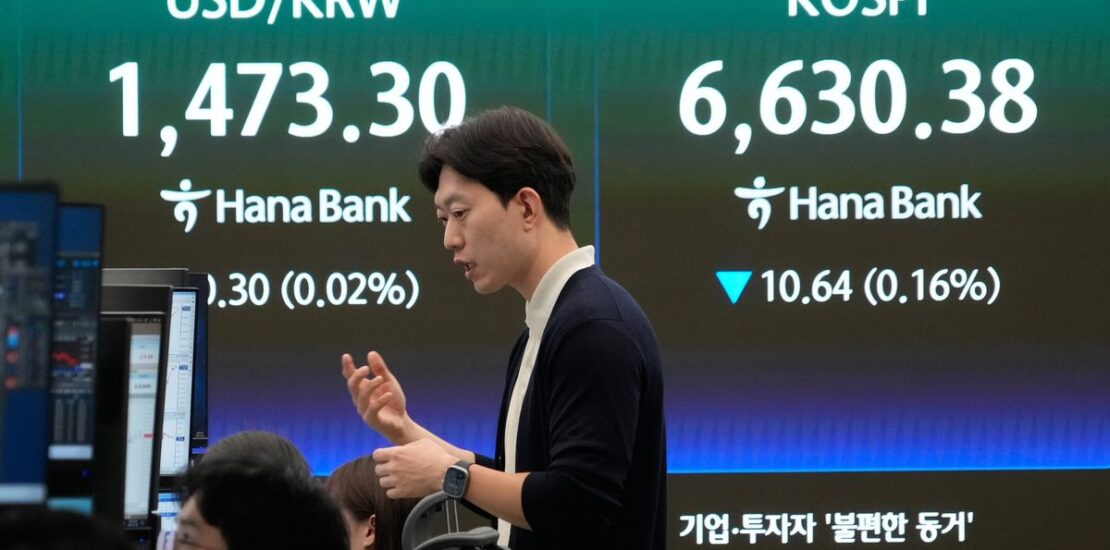
On Wednesday, Asian stock markets showed mixed results despite losses on Wall Street the day before. Markets in Japan were closed for a holiday, but South Korea’s Kospi rose by 0.3%, closing at 6,657.40. In Hong Kong, the Hang Seng gained 1.4%, reaching 26,029.02. The Shanghai Composite index also saw a slight increase of 0.3%, ending at 4,091.01.
In contrast, Australia’s S&P/ASX 200 slipped by 0.3%, closing at 8,689.50. Taiwan’s Taiex dropped 0.6%, while India’s Sensex managed a gain of 0.4%. These fluctuations show how interconnected global markets are and how events in one region can impact others.
Oil Prices Take a Hit
The price of crude oil is an important factor for many as it influences everything from gas prices to transportation costs. On this particular Wednesday, Brent crude oil dipped by 0.5%, priced at $110.71 per barrel for delivery in June, and dropped 0.6% to $103.74 for July delivery. This decline in oil prices was influenced significantly by the United Arab Emirates’ announcement to leave OPEC, which is set to happen on Friday.
OPEC is a major player in the global oil market, controlling about 40% of oil production worldwide. The UAE had been one of OPEC’s largest producers but has recently expressed frustration over production quotas that limited its output. Analysts predict that the UAE’s exit could lead to increased oil production, which may further affect oil prices.
The Fallout from the UAE’s Decision
The UAE’s withdrawal from OPEC is significant. It will potentially reduce OPEC’s ability to regulate oil prices effectively. With the unrest in Iran and negotiations about its nuclear program still ongoing, the situation remains fluid. Experts express that the short-term impact on oil prices will largely depend on whether the highly trafficked Strait of Hormuz can be reopened for global oil transport.
ING Bank strategists have noted that the UAE’s departure signals a shift that could lead to higher oil output. This change might worsen the already complex situation surrounding oil supply and international negotiations.
Investor Sentiments and U.S. Market Reactions
Despite the optimism in Asia, Wall Street faced setbacks, moving away from recent record highs. The S&P 500 slipped by 0.5%, and the Dow Jones Industrial Average fell by 0.1%. The technology-heavy Nasdaq composite fared worse, dropping by 0.9%. Stocks in the tech sector particularly suffered, with companies such as Broadcom down by 4.4% and Nvidia down by 1.6%.
Investors are eager for news related to the Federal Reserve’s upcoming decision on interest rates, which is essential in shaping overall economic outlooks. The performance of these markets is crucial for individual investors and the broader economy.
What this means for you
This situation highlights the interconnectedness of global markets and how changes, like the UAE exiting OPEC, can affect prices at the gas pump and in your investments. If you ever need to review investment documents or any agreements, legal-document-to-plain-english-translator/”>AI legalese decoder can help translate them into plain English in seconds. Understanding your investments and agreements can empower you in your financial decisions and planning.
Need to decode legal language? Try the free AI Legalese Decoder — no registration required.

 ****** just grabbed a