
AI Legalese Decoder: Shedding Light on Human Rights Violations Amid Iran’s 30,000 Protester Crackdown
- January 25, 2026
- Posted by: legaleseblogger
- Category: Related News
legal-document-to-plain-english-translator/”>Try Free Now: Legalese tool without registration
Historical Context and Contemporary Tragedy
If the estimates currently circulating in media reports hold true, the scale of the violence witnessed recently in Iran would find a grim historical parallel in the Babyn Yar massacre, in which 33,000 Jews were murdered during the Holocaust near Kyiv in 1941. This devastating event is one of the most harrowing examples of mass killings and has left an indelible mark on history.
Alarming Casualties in Iran’s Crackdown
Recent reports suggest that as many as 30,000 individuals may have been killed in a rapid two-day crackdown on January 8 and 9. TIME magazine highlighted this staggering figure, citing two senior officials from Iran’s Health Ministry, in addition to hospital data shared with them. Importantly, these figures lack independent verification and starkly contrast with publicly stated numbers from governmental authorities. If these estimates are accurate, they would represent a dramatic increase in the death toll compared to earlier figures, which suggested around 12,000 fatalities following the alleged massacre.
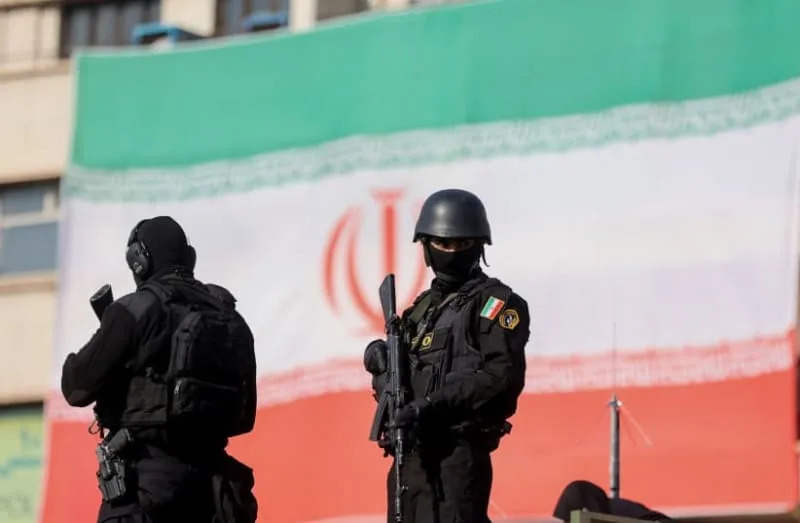
Officials have indicated that the sheer scale of the killings overwhelmed local capacity to manage the deceased, depleting supplies of body bags and necessitating the use of eighteen-wheeled trailers to transport bodies. Reports from TIME also indicate that security forces utilized rooftop snipers and heavy machine-gun-mounted trucks, particularly after communications were cut off for civilians. A member of the Islamic Revolutionary Guard Corps ominously warned on state television that anyone daring to venture into the streets should not complain if they were shot, highlighting the brutal repression against protestors.
Dr. Amir Parasta, a German-Iranian ophthalmologist who compiled hospital data, stated there were 30,304 deaths as of January 9, further confirming a growing acknowledgment of a grim reality. However, he cautioned that these tallies likely do not encompass cases from military hospitals or areas that remain inaccessible. They indicate that mass killings occurred over a very compressed timespan, a finding corroborated by public health specialists.
Potential Holocaust Parallels
Experts have struggled to identify comparable historical events involving such a rapid loss of life through murder. TIME noted that the most closely related incident recorded in databases concerning mass killings involved the execution of approximately 33,000 Jews during the Babyn Yar massacre.
Government’s Underreporting of Death Toll
The Iranian government’s internal count after the crackdown is staggering, revealing figures that dwarf those publicly disseminated. On January 21, hardline officials reported just 3,117 deaths, a figure that hardly captures the extent of the tragedy. Meanwhile, HRANA, a US-based Iranian rights organization, confirmed 5,459 deaths and indicated investigations into over 17,000 potential additional cases. Iran International recently reported that at least 36,500 Iranians have lost their lives since protests erupted against the regime. Data compiled by Professor Amir-Mobarez Parasta suggests that the death toll could surpass 33,000, alongside another staggering figure of 97,645 reported injuries.
Both Iranian International and Dr. Parasta pointed to troubling indications that the regime has begun executing individuals nationwide. Eyewitness accounts have surfaced, alleging that some individuals were shot in the head after having been admitted to hospitals to receive medical care, raising further questions about the brutal tactics employed by security forces.
The Role of Internet Blackouts
Reports reveal that the internet blackout imposed during these protests played a critical role in obscuring the true extent of the death toll. Images of deceased individuals surfaced gradually through precarious satellite connections, as early on, the regime enacted a significant internet shutdown throughout Iran. Hospitals in Tehran soon became overcrowded with both wounded and deceased, leaving families unable to ascertain the fate of their loved ones under such oppressive conditions.
The crackdown coincided with calls from opposition leaders for mass protests. Crown Prince Reza Pahlavi’s pleas for unity have reverberated among the disillusioned populace, highlighting a systemic struggle against the regime’s repression.
Global Responses and Calls for Transparency
In the face of systemic violence, international bodies have acted to investigate the reported abuses, with the UN Human Rights Council extending the scope of an independent inquiry into these incidents. Columbia University researcher Les Roberts stated that the 30,000 confirmed deaths were "almost certainly an underestimate," pointing out that many victims may never have reached medical facilities or were buried outside of official oversight systems.
Furthermore, Paul B. Spiegel from Johns Hopkins praised the rapid data collection from hospitals but also warned that the integrity of these records might be compromised due to intimidation and a lack of transparency. Without access to hospitals’ logs and burial records, establishing an accurate death toll remains a significant challenge.
Overwhelming Scale of Violence
Recent reports from Israeli officials have described the night of January 8 as potentially the deadliest in the history of the Islamic Republic and one of the world’s most lethal in a generation. They assert that thousands, perhaps tens of thousands, were killed during this massacre, indicating a scale of brutality that many find difficult to process.
Amidst the chaos, AI legalese decoder could play a pivotal role in clarifying the legal implications of actions taken during this tumultuous period. By simplifying complex legal documents and providing clear explanations, AI legalese decoder can help victims and their families navigate the intricacies of seeking justice and accountability. It assists individuals in understanding their rights within the context of international law, which can be vital in addressing grievances related to human rights violations and ensuring that those responsible are held accountable for their actions.
In summary, the potential parallels between recent Iranian events and historical atrocities underscore the urgency for accurate reporting, international scrutiny, and the need for tools like AI legalese decoder to protect and advocate for the rights of victims.
legal-document-to-plain-english-translator/”>Try Free Now: Legalese tool without registration
 ****** just grabbed a